Titebond III Ultimate is the first pick for most furniture builds, because it passes ANSI/HPVA Type I water resistance and gives you a longer open assembly time for complex glue-ups. That extra working time means you can fit a chair’s rails and legs together and square them up before the glue grabs, and the Type I rating covers pieces that may see moisture.
The best wood glue for furniture still depends on the job. Other picks below suit fast clamping on a weekend project, everyday indoor builds and repairs, outdoor pieces, or joints where you want a clear glue line. Match the water resistance and working time to your project, and you’ll get a joint that holds without a race against the clock.
As an Amazon Associate we earn from qualifying purchases.
How we picked: from products sold on Amazon for this need, compared by what their makers state and what buyers report in their reviews.
The Picks at a Glance
Product | Best for | Material type | Volume | Color | Buyer rating | |
|---|---|---|---|---|---|---|
Titebond III Ultimate | large furniture glue-ups | Wood | 4 fluid ounces | Tan | 4.8 of 5 (28,196 reviews) | |
Gorilla Wood Glue | quick weekend projects | Polyvinyl Acetate (PVA) | 236.6 ml | Natural Wood Color | 4.7 of 5 (34,409 reviews) | |
Gorilla Ultimate Waterproof | outdoor furniture | Polyvinyl Acetate (PVA) | 8 fluid ounces | Natural | 4.6 of 5 (19,979 reviews) | |
Titebond Original | indoor furniture and repairs | Polyvinyl Acetate (PVA) | 115 ml | Pack of 1 | 4.7 of 5 (12,307 reviews) | |
Boncart Super Strong | invisible glue lines | Polyvinyl Acetate (PVA) | 8.45 fluid ounces | clear | 4.6 of 5 (502 reviews) |
Buyer ratings as shown on Amazon on November 2, 2026; they change.
Titebond III Ultimate: Best for large furniture glue-ups

Titebond III Ultimate is the first pick for large furniture glue-ups, like a dining table top or a chair frame where several joints have to come together at once. It passes ANSI/HPVA Type I water-resistance standards, and the maker pitches it for furniture, cutting boards and outdoor projects exposed to weather. It also gives you longer open assembly time for complex glue-ups and precise alignment.
The maker lists a strong initial tack and fast grab on hardwoods, softwoods and composites. In daily use, that means a pine shelf or a plywood cabinet side stays put while you reach for clamps, and you can use the same bottle for both. The longer open time works with this. You can spread glue on a dozen dowel joints, dry-fit the frame, and nudge it square before the glue starts to grab.
It also works down to a 45°F application threshold, so an unheated garage in early spring doesn’t have to stop a project. It cleans up with water and sands without softening. You wipe squeeze-out with a damp rag instead of solvent, and a sanded joint won’t gum up your paper. Plan on letting a piece sit, because full cure takes 24 hours.
Pros
Type I water resistance, so it handles indoor and outdoor pieces
Extra working time for big, fussy assemblies
Buyers say it bonds strongly, holds well and resists water
Buyers find it easier to apply than poly glues
Cons
The bottle holds 4 fluid ounces, half the 8 fluid ounces of Gorilla Ultimate Waterproof, so a big table or bookcase build can empty it partway through
It dries tan, which can leave a visible line on pale woods like maple
If you want a waterproof glue line that won’t show at all, Boncart Super Strong dries clear and is the better fit.
Gorilla Wood Glue: Best for quick weekend projects

Gorilla Wood Glue suits you if you want to glue up a shelf, stool, or small table on Saturday and keep working on it Sunday. The maker lists a clamp time of just 20–30 minutes and a full cure in 24 hours. It also passes ANSI/HPVA Type II water resistance, so it handles both indoor and outdoor wood projects and repairs.
That short clamp time frees your clamps quickly. On a small project you can glue one joint, wait about half an hour, then move the clamps to the next assembly instead of leaving everything clamped all afternoon. The 24-hour cure means a piece glued one morning is ready to stress the next.
The glue is formulated for hardwoods, softwoods, and natural wood composites, so the same 8 oz bottle covers a pine bookshelf and a plywood cabinet back. It dries to a natural bond line with no foaming, and you can sand and paint it to match your finish. Without foam you skip trimming squeeze-out that has expanded out of the joint. Cleanup is simple: wipe wet glue with a clean, damp cloth, and scrape and sand any that has dried.
Pros
20–30 minute clamp time keeps small projects moving
Works on hardwoods, softwoods, and wood composites
Natural color with no foaming, sandable and paintable
Water-based PVA that cleans up with a damp cloth
Cons
Type II only, so it is water resistant rather than waterproof like Titebond III Ultimate, which matters for pieces that sit in rain or near standing water.
If your furniture will live outdoors year-round or face frequent soaking, Gorilla Ultimate Waterproof or Titebond III Ultimate fits better.
Gorilla Ultimate Waterproof: Best for outdoor furniture
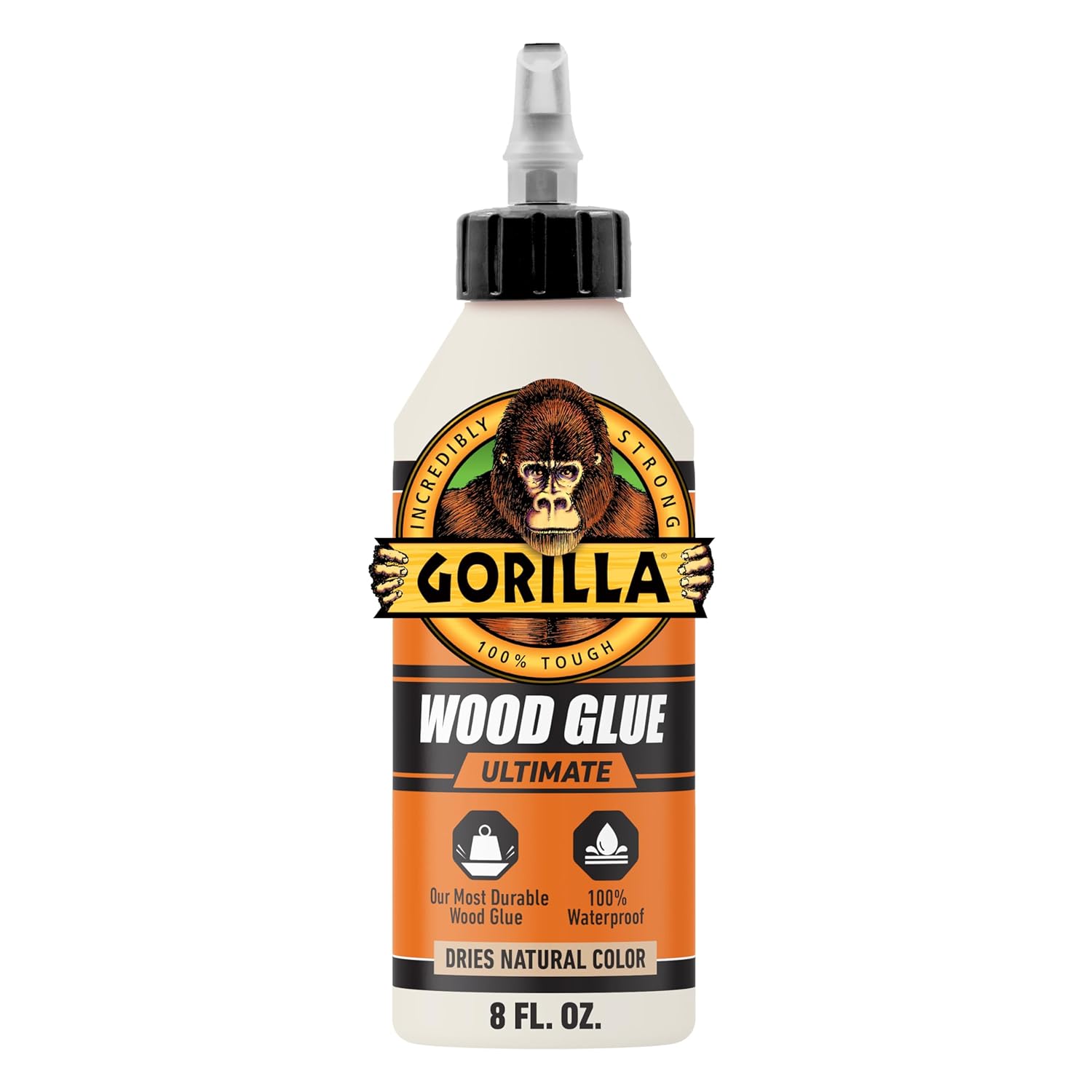
Gorilla Ultimate Waterproof is the pick for chairs, benches and tables that live outside, because it passes ANSI/HPVA Type I, the stricter waterproof rating. The maker says the bond withstands water, the sun and extreme temperatures. That makes it a good match for a porch rocker that sees rain one week and summer heat the next.
You get 15 minutes of working time before the bond sets. That is enough to spread glue on several joints, fit the parts and square up a bench frame without rushing, though very large glue-ups still go quicker in stages. The 8 oz bottle covers a few medium projects before you need another. It reaches full cure in 24 hours, so a piece glued on Saturday should sit until Sunday before anyone uses it.
The glue cures to a natural tan wood color and works on hardwoods, softwoods and natural wood composites. It dries with no foaming and can be sanded and painted, so squeeze-out sands flush and a painted Adirondack chair hides the joints completely. Because it is a water-based PVA glue, it comes off your hands with warm soap and water.
Pros
Type I waterproof rating for outdoor pieces
15-minute working time for unhurried assembly
Sandable and paintable with no foaming
Buyers say it holds very strongly, even under heavy loads
Cons
Buyers report that the glue sometimes will not come out of the bottle easily, which slows you down mid-glue-up.
Some buyers find it takes a long time to dry fully.
The tan bond line can show on light woods such as maple if you plan a clear finish.
If you want a glue line that disappears on pale wood, Boncart Super Strong dries clear and is also waterproof.
Titebond Original: Best for indoor furniture and repairs

Titebond Original is the pick for indoor furniture builds and repairs, like regluing a wobbly chair rung or assembling a bookcase. The maker calls it an industry standard wood glue for furniture repair and assembly, trusted by professionals and hobbyists alike.
The maker lists strong initial tack and a fast set time that reduce clamp time. In practice, parts stay put once you press them together, and your clamps come off sooner so you can move on to the next joint. Its aliphatic resin formula creates a bond that exceeds the strength of the wood itself. For a repaired chair, that means a well-fitted joint should hold as firmly as the surrounding wood.
It dries to a translucent film that sands smoothly without softening and is unaffected by most stains, paints and finishes. Squeeze-out you miss won’t gum up your sandpaper, and a stained tabletop is less likely to show a blotchy patch around the joint. Cleanup takes only water, and the formula is low-VOC and nonflammable. That makes it easy to use at a kitchen table or in a basement shop.
Pros
Fast set time cuts clamp time
Bond stronger than the wood
Sands cleanly and takes most finishes
Water cleanup with minimal fumes
Cons
Not water resistant, so keep it to indoor pieces that stay dry.
The 115 ml bottle runs out quickly on larger builds.
For a patio chair or anything that faces moisture, go with Gorilla Ultimate Waterproof instead.
Boncart Super Strong: Best for invisible glue lines

Boncart Super Strong is the pick for furniture where you don’t want a glue line showing, like a light maple tabletop or a visible miter on a picture frame. The maker says it dries clear and leaves no visible glue lines. It is also waterproof for indoor and outdoor use.
A clear dry means a small squeeze-out bead you miss at a joint is less likely to stand out as a dark or tan stripe on pale wood. The glue is a PVA (polyvinyl acetate) glue, the same family as most yellow and white wood glues, so it handles like the glue you already know. The maker lists it for hardwoods, softwoods and natural wood composites, which covers anything from oak chair rails to particleboard shelf repairs.
Clamp time is 20–30 minutes, and the glue fully cures within 24 hours. In practice, you can glue a drawer joint, pull the clamps after half an hour and move on, but leave the piece unloaded until the next day. The 8.45 fl. oz bottle comes with a brush for spreading glue evenly over wider surfaces like edge-joined boards. That bottle holds about twice what the 4 fluid ounces Titebond III bottle does, so you refill less often on bigger builds.
Pros
Dries clear, so joints stay hard to spot
Waterproof for indoor and outdoor pieces
Clamps can come off in 20–30 minutes
Brush included for even spreading
Cons
You need to wait a full 24 hours before putting weight on the joint, so it’s not ideal for a same-day repair you need to use right away.
If your outdoor piece will face sun and extreme temperatures, Gorilla Ultimate Waterproof is the better fit.
How do you pick the right furniture glue?
Start with where the piece will live, then match working time, glue line color and bottle size to the build. Those four choices narrow the field fast.
Water resistance comes first. ANSI/HPVA Type I glue suits pieces exposed to weather, like a porch bench or a cutting board. Type II glue still covers indoor and outdoor wood projects and repairs. Glue with no water resistance rating belongs on furniture that stays inside. A bedroom dresser doesn’t need Type I, but a patio table does.
Working time matters more as the glue-up grows. Working time is how long you have to position parts before the glue grabs. A 15-minute working time gives you room to align parts before the bond forms. A chair with a dozen joints needs that margin. A single edge joint is fine with a fast-grabbing glue.
Glue line color shows on the finished piece. A glue that cures to a natural tan works on medium and darker woods. A glue that dries clear leaves no visible line. If you plan to stain, pick a glue that is unaffected by most stains, paints and finishes.
Bottle size should fit the job. A 4 fl oz bottle handles a repair or a small box. For a table or a set of chairs, an 8.45 fl oz bottle means fewer trips to the store.
Which glue should you buy first?
Titebond III is the first pick for furniture glue-ups because it gives you waterproof strength and extra time to line up parts before the glue grabs. It passes ANSI/HPVA Type I water resistance. That means one bottle covers a dining chair, a cutting board or a porch bench without you switching glues.
Before you buy, decide whether the piece will ever face moisture. A bookshelf in a dry bedroom doesn’t need what a patio table does. Settle that first, then match the glue to the job. If you only build one project this month, start with the glue that fits where that piece will live.