Milwaukee M18 High Output batteries are worth it if you run high-draw saws, since that is where the extra power shows up. The HIGH OUTPUT XC6.0 and CP3.0 packs provide 50% more power and run 50% cooler than other M18 REDLITHIUM XC and CP packs. [1] In practice, a reciprocating saw or chainsaw keeps its speed better in a long cut, while a light trim tool gains much less. To go further, see Milwaukee M18 FUEL Compact Router: What It Handles and Its Limits.
You also don’t need new tools to use them. Milwaukee states the XC6.0 High Output pack is fully compatible with 150+ M18 solutions, so it slides onto the saws you already own. [2] Learn more in Milwaukee M18 FUEL Cordless Angle Grinders: What to Know.
Below you’ll see how High Output packs differ from standard REDLITHIUM batteries, which cutting tools benefit most, which size to buy and what they cost.
High Output vs standard REDLITHIUM at a glance
The table below lines up what each type offers on the points that matter when you run a saw.
Criterion | High Output (CP3.0, XC6.0, XC8.0) | Standard REDLITHIUM (XC, CP) |
|---|---|---|
Cell type | 21700 cells (21 mm by 70 mm) | 18650 cells (18 mm by 65 mm) |
Cold weather | Increased power below 0°F (XC6.0) | No extra claim |
Fits M18 tools | Yes | Yes |
For a saw, cooler running matters because a hot pack is what slows you down halfway through a long rip or a stack of pipe cuts.
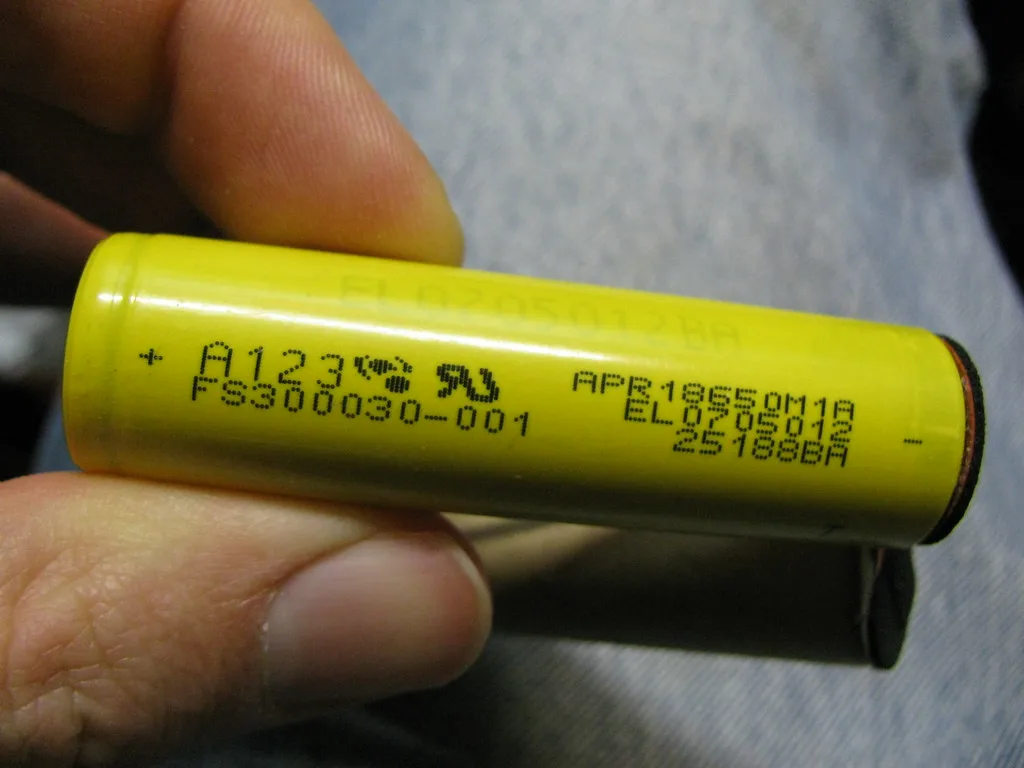
The difference comes from the cells inside. High Output packs use larger 21700 cells, while traditional packs use 18650 cells, which are more compact but give less runtime. [3] That size gap is why a High Output pack feels a bit bigger on the tool than the standard pack it replaces.
The High Output sizes you will see most often are the compact CP3.0, the mid-size XC6.0 and the larger XC8.0. [1][4] The XC6.0 also adds increased power in extreme cold, below 0°F. [2]
All of them slide onto the same tools. The M18 battery platform is fully backwards compatible, so a High Output pack powers older M18 saws as well as new ones. [3] The XC6.0 alone is listed as compatible with more than 150 M18 tools. [2]
What makes a pack High Output?
A High Output pack is built to move more current to the motor with less resistance and less heat, so a saw keeps its speed when the blade is buried in a cut. The difference comes from three changes inside the pack: bigger cells, a lower-resistance path to the tool and better heat handling.
Bigger cells and a lower-resistance path
Milwaukee builds these packs with 21700 cells instead of the older 18650 size. Those numbers are the cell dimensions, 21 mm by 70 mm versus 18 mm by 65 mm. [5] Larger cells can hand off more current at once, which is what a saw motor asks for when you lean into a thick oak board or a pipe.
The pack also uses thicker wire and better connections to lower resistance, measured in ohms, between the cells and the motor. [5] Less resistance means less energy is lost along the way, so more of it turns the blade.
Steady power through the whole cut
The XC6.0 version delivers fade-free power through heavy applications. [2] In practice, “fade-free” means the saw does not slowly bog down as the pack drains. A rip cut on your last board should feel much like the first.
The bigger cells give the pack a larger footprint than other M18 REDLITHIUM batteries, but it keeps the same connection as regular M18 packs. [5] Expect a slightly bulkier pack hanging off the tool.
Cooler running in long cuts
Moving more current builds more heat, so the pack is designed to shed it better. [5] Heat is what makes a tool’s protection circuits slow it down or stop it partway through a long cut, such as ripping a sheet of plywood or cutting through a stack of studs.
The XC6.0 runs substantially cooler through heavy applications, letting you push a tool harder and longer. [2]
Where the design came from
Milwaukee was already talking about next-step battery development when it announced its 9.0Ah High Demand pack, and the High Output line grew out of that work. [5]
Which cutting tools benefit most?
FUEL saws that work hard for long stretches get the most out of a High Output pack, because that is where steady power and lower heat show up in the cut. Think of a reciprocating saw ripping through a stack of 2x10s during demolition, a circular saw cutting sheets of plywood, or a chainsaw bucking a downed limb. These tools pull a lot of current, and a pack that holds its output keeps the blade speed up.
Heavy-load FUEL saws
The XC6.0 High Output delivers fade-free power and runs substantially cooler through heavy applications. [2] For you, that means the saw is less likely to bog down halfway through a thick beam or slow down after a dozen back-to-back cuts. It also gives more power in extreme cold, below 0°F, which helps if you cut outdoors in winter. [2]
These packs are a little bigger than standard M18 batteries because they use larger cells, but they keep the same connection. [5] On a full-size saw that extra bulk is easy to live with.
Compact and one-handed tools
The CP3.0 High Output gives you more power from a small pack, so a compact tool stays light in your hand. [1] That suits a one-handed saw like the Hackzall when you prune overhead branches or cut pipe in a tight cabinet, where a heavy XC pack would tire your arm and throw off the balance.
Light trim and occasional cuts
For light work, a standard pack is enough. Cutting a few pieces of quarter-round, trimming a door casing or making the odd cut in thin pine barely loads the motor, so the extra output has little room to help. If your saw sits on the shelf most weeks, the standard batteries you already own will handle these jobs fine.
Which High Output size should you buy?
Buy the XC6.0 High Output if you want one pack that suits most saws, the CP3.0 for compact and one-handed tools, and the XC8.0 if you run long cutting sessions. The right size depends on which saw you use most and how long you cut between charges.
CP3.0 for compact and one-handed tools
The CP3.0 is the smallest High Output pack. It makes sense on tools you hold with one hand or work with overhead, like a one-handed reciprocating saw cutting PVC or small branches. A lighter pack keeps your wrist from tiring and keeps the tool balanced in tight spots such as under a sink or between studs.
The trade-off is runtime. A 3 Ah pack empties faster than a bigger one, so a spare helps when you have a lot of cuts to make.
XC6.0 for most saws
The XC6.0 is the all-rounder. Milwaukee describes it as an optimized combination of size and increased power for the entire range of M18 products. [2] In practice, it is a sensible default for a circular saw, a full-size reciprocating saw or a band saw, where you need steady power without a pack so heavy it throws off the tool’s balance.
The pack carries the model number 48-11-1865. [2]
XC8.0 for long sessions
The XC8.0 suits days of continuous cutting, such as demo work, framing or clearing a lot of brush. It is sold as a High Output 8.0Ah pack offering longer runtime and more power. [4] It is the biggest and heaviest of the three, so it fits best on larger saws that you set down between cuts.
The 48-11-1865S two-pack
If you run both a compact saw and a full-size saw, the 48-11-1865S kit covers both. It includes one M18 REDLITHIUM HIGH OUTPUT XC6.0 (48-11-1865) and one CP3.0 (48-11-1835). [6] You can keep the CP3.0 on your one-handed saw and the XC6.0 on your heavier one.
What do High Output packs cost?
High Output packs cost more than standard M18 batteries, and the easiest way to keep the price down is to buy them in a bundle or secondhand. Two real listings show the range you can expect.
New: the 48-11-1865S two-pack
The 48-11-1865S kit pairs one CP3.0 High Output pack with one XC6.0 High Output pack, and one retailer lists it at $298.00. [6] The kit includes the XC6.0 battery 48-11-1865 and the CP3.0 battery 48-11-1835. [6] You get one compact pack for a one-handed saw and one larger pack for a circular saw or reciprocating saw.
This kit has no charger, so it makes sense if you already own M18 tools and a charger. If you are starting from scratch, add the cost of a charger to your budget.
Used: an XC8.0 with a charger
One secondhand listing offers a High Output XC 8.0Ah battery with a multi-voltage rapid charger for $225. [4] The seller describes it as in great condition and fully functional. [4] For less than the new two-pack, you get the largest High Output size plus a way to charge it. The trade-off is one battery instead of two, and you take on the risk of buying used.
Buying used without regrets
A used pack is only a bargain if it still holds a charge. Before you hand over cash, ask the seller to put the pack on the charger and on a tool, and watch the onboard fuel gauge. A pack that drops from full to empty during a few test cuts is worn out, whatever the listing says.
Prices for new packs move with sales and bundles, so compare a used offer against the current retail price on the same pack before you buy.
Common questions about High Output packs
Do High Output packs fit older M18 tools?
Yes, High Output packs slide onto older M18 tools the same way standard packs do. The M18 battery platform is fully backwards compatible, so a saw or drill you bought years ago takes a new High Output pack without an adapter [3]. The XC6.0 alone is listed as compatible with 150+ M18 solutions [2].
For you, that means upgrading batteries never forces you to replace tools. You can buy one High Output pack for your reciprocating saw and still use it on an older impact driver or work light when the saw is idle.
Can you mix standard and High Output packs on the same job?
You can, and most people do. Each pack works on its own, so you might run a High Output pack in your circular saw for long rip cuts while a standard pack powers your drill for pilot holes.
The practical move is to put the High Output pack where the load is heaviest. A pack that delivers fade-free power and runs cooler through heavy applications helps most in a saw pushing through thick lumber [2]. A drill driving a few screws won’t notice the difference much, so a standard pack is fine there.
Keep in mind that High Output packs use larger 21700 cells, while traditional packs use 18650 cells [3]. That makes the High Output pack the bulkier of the two on a small tool.
Is the extra power useful on small tools?
Usually only a little. Small tools like compact drivers, inspection lights and small vacuums rarely draw enough current to use the added power, so a standard pack gives you similar results with less bulk.
The exception is cold weather. The XC6.0 High Output pack provides increased power in extreme cold below 0°F [2]. If you work outdoors in winter, even a light-duty tool may run better on a High Output pack.
Which battery should you pick?
Match the pack to how hard and how long you cut. If you run a FUEL reciprocating saw, circular saw or chainsaw through thick lumber, pipe or long rip cuts, get the XC6.0 High Output. It gives you the extra power and cooler running where your saw actually needs them.
For a one-handed saw like the Hackzall, pick the CP3.0 High Output so the tool stays light enough to hold overhead or in tight spots. If you only make a few trim cuts or the occasional quick crosscut, keep using the standard packs you already own. Your next step is to look at the saw you use most and buy the one pack that suits it.
Sources
Milwaukee – M18 18-Volt Lithium-Ion High Output Battery Pack 6.0Ah
Milwaukee 48-11-1865 M18 Redlithium High Output Xc 6.0 Battery Pack
Milwaukee M18 High Output vs Standard REDLITHIUM Batteries – Ohio Power Tool News
Milwaukee M18 Advanced Batteries Take M18 Fuel Tools to the Next Level
Milwaukee 48-11-1865S M18 REDLITHIUM HIGH OUTPUT (1) CP 3 Ah and (1) XC 6 Ah Batteries

