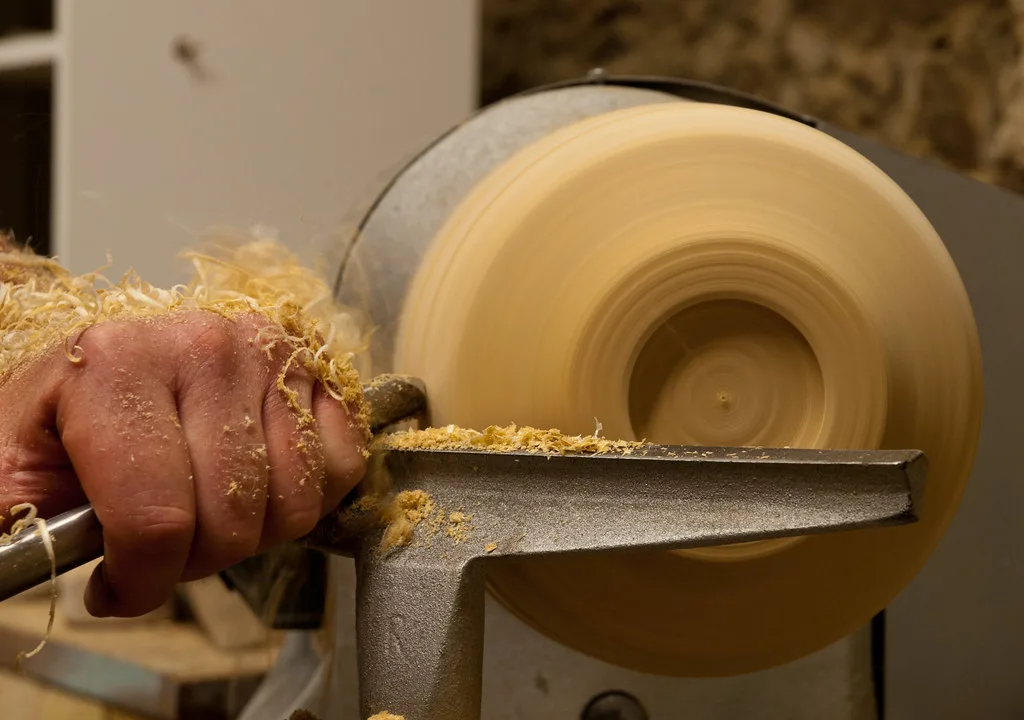
Benjamin’s Best lathe tools are a sensible, affordable way to start woodturning, and they make the most sense while you’re learning. Once you turn heavily, you’ll likely want to replace your most-used tools with better ones. The brand sells a full line of lathe tools, from gouges and parting tools to skew chisels, scrapers and chisel sets [1]. They’re imported high speed steel (HSS), and some of the highest-rated HSS import kits on the market [2].
Many new turners start with the award-winning Benjamin’s Best M2 HSS six-piece set [3]. Below you’ll see what the tools do, where budget steel falls short, and when an upgrade is worth your money.
Key takeaways
-
Benjamin’s Best is a budget line of HSS lathe tools.
-
The six-piece M2 set is a common first purchase.
-
Plan to upgrade one tool at a time as your turning grows.
What tools does Benjamin’s Best make
Benjamin’s Best makes a full line of wood lathe tools, so you can build a basic turning kit from one brand. The line includes spindle gouges, roughing gouges, parting tools, skew chisels, scrapers, lathe chisel sets and more. [1]
Gouges and parting tools
Gouges are the tools you will reach for most. A roughing gouge is the wide, deep-fluted tool you use first, while a spindle gouge has a shallower flute for detail work on pieces held between centers, like table legs, pens and tool handles. [1]
Parting tools are narrow blades that cut straight down into the spinning wood. You use one to set a diameter, cut a tenon, or separate a finished piece from the waste. Since a pen blank, a candlestick and a chair spindle all need these cuts, gouges and a parting tool cover a lot of beginner projects.
Skews, scrapers and sets
The line also has skew chisels and scrapers. [1] A skew chisel has a cutting edge ground at an angle across the blade. A scraper has a flat or rounded edge that takes light cuts, which makes it easier for a new turner to control.
If you would rather not pick tools one at a time, Benjamin’s Best sells lathe chisel sets. [1] Its High Speed Steel import kits are some of the highest rated on the market. [2] High speed steel (HSS) is the standard tool steel for turning, and it holds an edge longer than plain carbon steel.
Buying single tools by size
You can also buy Benjamin’s Best turning tools one at a time and choose the size you want. [2] This helps when your projects call for one shape again and again. For example, if you mostly turn pens, you can add a smaller spindle gouge. If you work on bigger spindles, a wider roughing gouge lets you take bigger cuts and round the stock faster.
Buying by size also lets you replace one tool that you have worn short from sharpening, so you keep the rest of your kit.
Is the 6-piece HSS set a good first set
Yes, for most new turners the 6-piece set is a sensible first purchase, because it gives you a matched group of tools in one box instead of making you guess which single gouges to buy. The set is made of M2 high speed steel (HSS) and includes six lathe chisels. [3] [4]
What M2 HSS means for you
High speed steel is the standard material for turning tools, and M2 is a common grade of it. For a beginner, that means the tools behave like the ones in most turning books and videos, so the techniques you learn carry over when you buy other tools later.
The set comes with wooden handles and metal cutting heads. [4] Wooden handles are a plus when you’re learning, since they absorb some vibration and give you a feel for when a cut is catching.
Recognized as a best value
The set is sold as WOOD Magazine’s Best Value in HSS lathe chisels. [3] That label is about price-to-performance, so read it as “good tools for the money,” not “the best tools you can buy.” For a first set, that’s usually the right trade-off: you’ll grind some steel away learning to sharpen, and it’s easier to do that on tools that didn’t cost a fortune.
What you can make with it
Six tools cover the basic cuts most beginners need for spindle work and small bowls. A typical first-month project list fits well within that range:
-
Pens, bottle stoppers and tool handles, where you round stock and shape beads and coves
-
Candlesticks and chair-style spindles, where you smooth long surfaces and part off to length
-
Small bowls and dishes a few inches across, where you hollow and clean up the inside
Where a six-piece set runs out of room is larger, deeper bowls. Those call for a dedicated bowl gouge, which you can add once you know you enjoy bowl turning.
The practical upside is that you learn every basic cut before deciding which tools deserve an upgrade. After a few dozen projects, you’ll know which two or three tools you reach for most, and that’s where your next dollars should go.
What each lathe tool is used for
Each tool in a basic lathe set handles one job, and you’ll use them in roughly the order a blank moves from square stock to a finished piece. Benjamin’s Best makes all of the tools below: spindle gouges, roughing gouges, parting tools, skew chisels and scrapers [1].
Roughing gouge
The roughing gouge turns a square blank into a cylinder. Picture a 2-by-2-inch table leg blank: you run the gouge along the spinning corners until they disappear and the piece is round. It takes off wood fast, so it’s the first tool you pick up on almost every spindle project.
Spindle gouge
Once the stock is round, the spindle gouge does the shaping. You use it for beads (rounded bumps) and coves (scooped hollows), the details you see on chair spindles, pens and candlesticks. Its shallow flute lets you roll the edge into tight curves.
Skew chisel and parting tool
The skew chisel has an angled edge that slices wood fibers cleanly. Used right, it leaves a planed surface smooth enough that you need little sanding. It has a reputation for catching, so practice light cuts on scrap first.
The parting tool is narrow and cuts straight in. You use it to set diameters, for example cutting down to a 1-inch tenon, and to separate the finished piece from the waste at the end.
Scraper
The scraper refines surfaces after the gouges have done the heavy work. On a small bowl, you use it to smooth the inside curve and remove ridges left by earlier cuts. Hold it slightly downhill with light pressure for the cleanest result.
Safe habits with every tool
Keep the tool rest close to the work and just below center, and move it as the piece gets smaller. A wide gap gives the tool leverage to catch and kick back. Spin the blank by hand before you start the lathe to make sure nothing hits the rest.
Wear a full face shield, because chips and an occasional piece that comes loose fly straight at you. Treat the edges with respect off the lathe too: freshly sharpened HSS cuts skin easily, so store tools with the edges protected and never grab one by the flute.
Where budget HSS tools fall short
Budget high speed steel (HSS) tools cut well, but they ask more of you at the grinder and they leave out some of the tools you may want later. Benjamin’s Best tools are import HSS, sold as some of the highest rated HSS import kits on the market [2]. That puts them in the same group as many other low-cost imports, with the same tradeoffs.
Plan on sharpening often
Any HSS edge dulls as you turn, and a dull gouge tears fibers instead of slicing them. You will notice it as fuzzy end grain, more vibration and a tool that has to be pushed harder into the wood.
With budget steel, expect to stop and touch up the edge several times during a single bowl or a long spindle. That makes a sharpening setup part of the real cost of the set. If you skip it, even a good starter set will feel like it is fighting you.
Other brands sit on the same shelf
Woodturning shops often sell Benjamin’s Best alongside Easy Wood Tools and Nova [5]. Seeing them together helps you compare approaches before you spend.
The choice usually comes down to how you want to handle sharpening:
-
Traditional HSS gouges and skews, like Benjamin’s Best, teach you bevel-riding cuts but need regular grinding.
-
Tools from brands such as Easy Wood Tools are a different style to consider if you want to spend less time at the grinder.
-
Nova tools are another option in the same aisle, worth comparing if you already own Nova lathe accessories.
Multi-piece sets compete on count
Some rival sets offer more pieces for a similar budget. The Hurricane 8pc Wood Lathe Chisel Set, for example, is M2 HSS with 10″ solid hardwood handles and is marketed to beginners and DIY hobbyists [6].
More pieces is not automatically better. Two extra tools you never reach for only add to your sharpening pile, so compare which profiles each set includes against the projects you plan to turn. Pick the set whose tools match the pens, spindles or bowls you actually want to make, and handle length matters too: a longer handle gives you more leverage on bigger work.
When should you upgrade your lathe tools
Upgrade one tool at a time, starting with the cut you make most often. If most of your shop time goes into spindles like pens, tool handles or table legs, a better spindle gouge pays off first. If you’ve moved on to bowls, that’s where your money should go.
A full replacement set sounds tidy, but it usually means paying for tools you barely touch. A parting tool that only comes out at the end of a project rarely needs replacing early. The gouge you use for the whole job does.
Signs a tool is holding you back
Pay attention to which tool sends you back to the grinder most often or leaves the roughest surface. That tool is your upgrade candidate. A few examples:
-
You keep stopping mid-bowl to resharpen the same gouge.
-
Your projects have outgrown the size the tool handles comfortably.
-
You avoid a cut, like hollowing a deeper bowl, because no tool in the set does it well.
What to add as your projects grow
A bowl gouge is the most common next step once you start turning bowls regularly. It’s built for the long, curved cuts across end grain and side grain that a spindle gouge isn’t designed for.
A carbide tool is another option, especially if sharpening is your bottleneck. Instead of grinding an edge, you rotate or replace a small cutter, which keeps you turning instead of sharpening. U.S. turning suppliers carry Easy Wood Tools and Nova alongside Benjamin’s Best, so you can mix brands and add a single carbide or premium tool without abandoning your set [5].
Keep the starter set
Don’t sell your first set when you upgrade. Those tools are ideal for practice, where you’re learning a new cut and expect to make mistakes, and for rough work on knotty, dirty or bark-covered blanks you’d rather not run your best edge through.
They’re also good for experimenting with grinds. Reshaping the profile on a budget gouge to try a new technique costs far less than practicing on a premium tool. Over time you end up with a mixed kit: a few upgraded tools for the work you do most and your original set for everything else.
Picking your first set
If you’re new to turning and watching your budget, start with the Benjamin’s Best 6-piece M2 HSS set and learn the basic cuts before you buy anything else [3]. Six tools are enough to make your first spindles, pens and small bowls, and you’ll find out which shapes you reach for most.
Plan your sharpening setup at the same time you order the tools. A grinder or sharpening system with a jig for gouges keeps the edges cutting cleanly, and a sharp tool is easier to control than a dull one. Prices on sets and grinders shift often, so check the current listing before you buy.