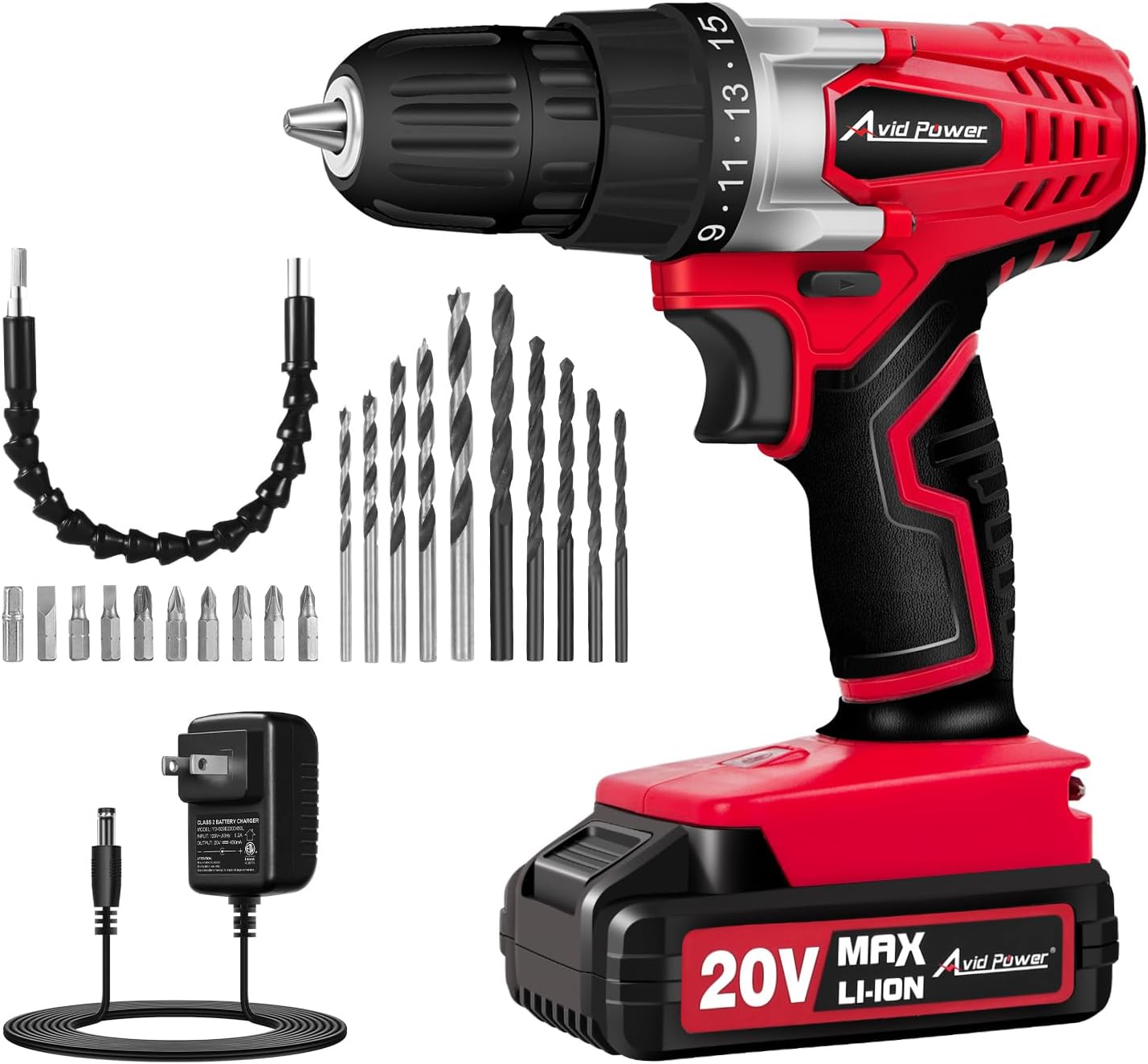
The Metabo HPT NT65M2S is the first pick for a 16 gauge finish nailer if you have an air compressor and a lot of trim to hang. It weighs 3.7 lbs, so your arm tires less over a long day of baseboard. You can change nail depth without tools and switch between bump fire and sequential fire, which lets you slow down for precise casing and speed up on long runs.
A 16-gauge finish nailer fits jobs like molding and chair rail. The nails hold heavier trim such as baseboard and casing, and the holes are still small enough to fill and paint.
The five picks below include four pneumatic nailers and one cordless model for working without a hose. This article contains affiliate links, and the site may earn a commission if you buy through them.
As an Amazon Associate we earn from qualifying purchases.
How we picked: from products sold on Amazon for this need, compared by what their makers state and what buyers report in their reviews.
The Picks at a Glance
Product | Best for | Item weight | Weight | Buyer rating | |
|---|---|---|---|---|---|
Metabo HPT NT65M2S | long trim sessions | 3.7 lb | 3.7 lb | 4.7 of 5 (1,951 reviews) | |
HBT HBT64P | protecting finished surfaces | 7.44 lb | 7.44 lb | 4.5 of 5 (337 reviews) | |
Bostitch BTFP71917 | stain-sensitive trim | 7.3 lb | 7.3 lb | 4.6 of 5 (571 reviews) | |
3PLUS HT64SP | short nails in thin stock | 6.29 lb | 6.29 lb | 4.4 of 5 (329 reviews) | |
Craftsman V20 CMCN616B | working without a compressor | 7.48 lb | 7.48 lb | 4.3 of 5 (229 reviews) |
Buyer ratings as shown on Amazon on November 14, 2026; they change.
Metabo HPT NT65M2S: Best for long trim sessions

The Metabo HPT NT65M2S is the pick if you have a full day of trim ahead and want a nailer that stays light in your hand. It weighs 3.7 pounds and is balanced for minimal fatigue, which counts when you are nailing casing overhead or crouching along baseboard for hours. It also takes 16-gauge finish nails from 1 in up to 2-1/2 in, enough to cover most molding and chair rail work.
A switch on the tool lets you pick bump fire or sequential fire, so you can run fast along a long baseboard and switch to one nail per trigger pull for careful miter joints. Depth of drive adjusts without tools, which helps when you move from soft pine casing to harder trim stock and need the nail heads set just below the surface. The 360 degree exhaust port turns to blow air away from you, and a duster button clears sawdust off the work before you fire. A no-mar tip on the nose keeps the tool from denting finished faces.
It has been named the Pro Preferred Nailer by Builder and Developer Magazine for 12 years running, from 2014 to 2025. It comes with a carrying case, safety glasses and a 1/4″ NPT male plug, and Metabo HPT covers it with a 5-year tool warranty.
Pros
At 3.7 pounds it is about half the weight of the other picks, which run from 6.29 to 7.48 pounds
Bump and sequential fire on one switch
Buyers say it fires reliably, is easy to use for trim and feels comfortable to handle
Buyers report it has enough power for thick fiber cement trim
Cons
Some buyers report occasional jams
It is pneumatic, so you need an air compressor and hose, which adds setup time and a hose to drag around each room
If you want to skip the compressor entirely, the Craftsman V20 CMCN616B is the better fit.
HBT HBT64P: Best for protecting finished surfaces

The HBT HBT64P is the pick for you if you’re nailing prefinished or painted trim and can’t afford dents around every nail. The maker fits it with a no-mar rubber tip and keeps a spare right on the tool, so the nose that presses against your work is soft. It drives 16 gauge finish nails from 1 in to 2-1/2 in, which covers thin casing up through thicker baseboard.
The housing is magnesium, chosen for weight reduction and durability. Even so, the full item weight is 7.44 pounds, about double the 3.7 pounds of the Metabo HPT NT65M2S, so your arm will feel it during long runs of crown or other overhead work. A flip of a switch changes between bump fire and sequential single fire, so you can move fast along baseboard and slow down for precise placement on a mitered corner.
A dry-fire lockout stops the tool when the magazine is empty, so you don’t fire a blank and leave a dent with no nail in it. The 360° swivel air plug reduces hose twisting, which helps when you’re working your way around a room. You set depth and clear jams without tools, so you don’t have to hunt for a hex key halfway up a ladder.
Pros
A no-mar tip plus a spare kept on the tool
The dry-fire lockout tells you the magazine is empty
Buyers say it is easy to load and simple to run, and it keeps driving long stainless steel nails reliably
Buyers like the carrying case for storage and transport
Cons
Some owners report jams during use, so plan on clearing the occasional nail
You need an air compressor, and none comes in the box, which adds cost if you don’t already own one
At 7.44 pounds, it is heavier than the other picks, a burden for overhead trim
If you don’t have a compressor, the cordless Craftsman V20 CMCN616B fits you better.
Bostitch BTFP71917: Best for stain-sensitive trim
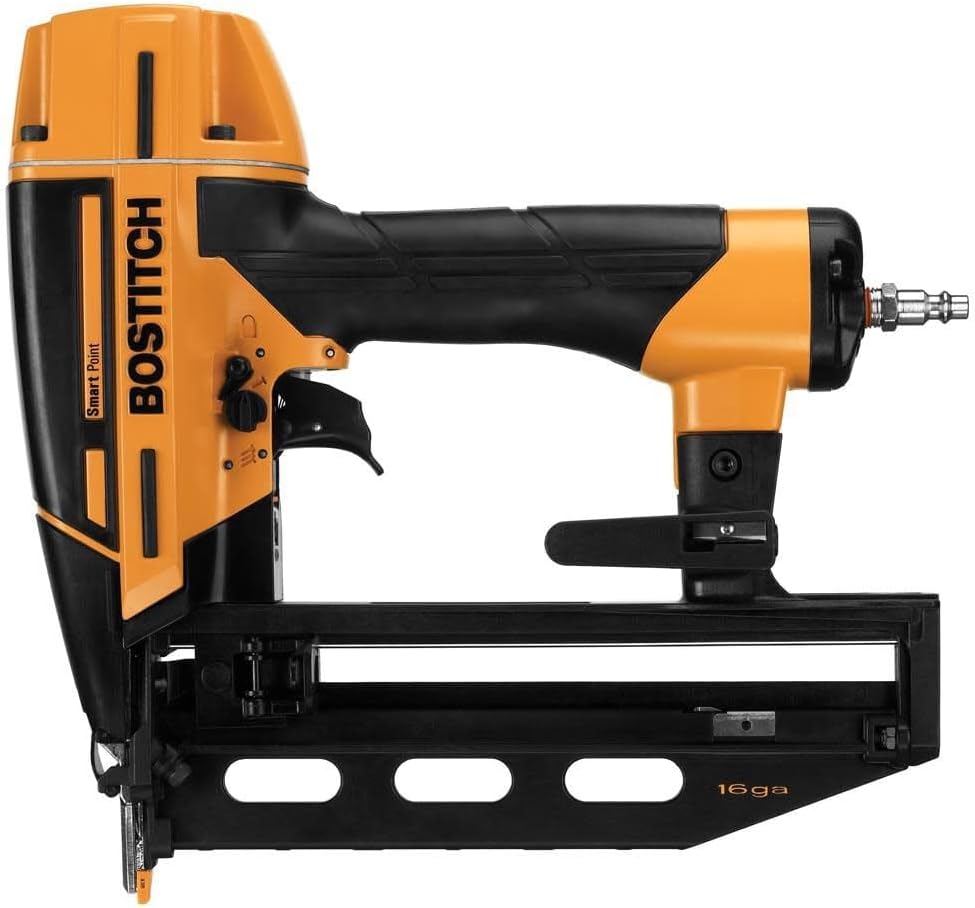
The Bostitch BTFP71917 is the pick if you’re nailing trim that will be stained or clear-coated, where a drop of oil could leave a mark. It runs oil-free, which the maker says reduces the risk of oil stains. That means you can skip oiling the tool before each session and worry less about blotches on light-colored oak or maple casing.
The maker lists a nail range of 1-1/4 to 2-1/2 inches. The 2-1/2 inch end handles thicker baseboard nailed into studs. The 1-1/4 inch minimum means you can’t shoot 1 inch nails, so very thin stock like small cove or shoe molding may call for a different tool. The trigger switches between sequential and contact operation. Sequential places one careful nail at a time, and contact lets you move quickly along a long run of baseboard.
Dial-A-Depth control lets you set how deep nails countersink. You turn a dial to sink heads just below the surface for filler instead of reaching for a wrench. A tool-free jam release lets you clear a stuck nail by hand. Other details include a rear air exhaust and a belt hook with a built-in pencil sharpener. The rear exhaust keeps air from blowing dust toward your face.
The kit comes with the nailer, a 1/4-inch air fitting, a carrying case and extra no-mar tips. The spare tips mean you can replace a worn tip before it starts marking finished surfaces. Bostitch backs it with a 7-year limited warranty, cut to 1 year in production applications. That longer term applies to homeowners and hobbyists, while full-time pros get less coverage.
Pros
Oil-free operation for stain-grade trim
Kit includes a case and extra no-mar tips
Buyers say the narrow Smart Point nose places nails precisely without marking the work
Buyers report it works well on molding and baseboard
Cons
Buyers report frequent jams, in some cases as often as every fifth nail, which slows down long runs
Some buyers say parts broke off during use
At 7.3 pounds it is nearly twice the weight of the 3.7-pound Metabo HPT NT65M2S, so it tires your arm sooner on overhead crown work
If you mainly install thin molding that needs 1 inch nails or shorter, the 3PLUS HT64SP is a better fit.
3PLUS HT64SP: Best for short nails in thin stock

The 3PLUS HT64SP is the pick if your trim work includes thin stock that calls for short nails. It takes 16-gauge finish nails from 3/4″ to 2-1/2″, the widest length range among these picks, so the same gun can tack thin cove or shoe molding and still drive longer nails through casing into framing.
That 3/4″ low end matters when a 1″ nail would poke through the back of a thin strip or split it. The maker also lists tool-free depth adjustment, so you can set nails flush or slightly below the surface without hunting for a wrench. A quick-clear jam release lets you clear a bent nail on the spot and keep working.
The exhaust cover rotates 360°, so you can point the blast of air away from your face or away from dust on a fresh paint job. Interchangeable triggers let you switch between sequential fire (one nail per trigger pull, for careful placement) and bump fire (nails fire as you tap the nose along a run, for speed). Swapping triggers takes a little more effort than flipping a switch, but you get both modes in one tool.
Pros
3/4″ to 2-1/2″ nail range covers thin and thick trim
Rotating exhaust keeps air off you and your work
Buyers say it is well made and a good value for the cost
Many buyers report it rarely jams
Cons
At 6.29 pounds, it is much heavier than the Metabo HPT NT65M2S at 3.7 pounds, which you will notice on overhead crown work
Some buyers report the plastic nose tip breaks off over time
Some buyers find it jams frequently, though others report the opposite
If you spend long stretches nailing overhead or at arm’s length, the lighter Metabo HPT NT65M2S is the better fit.
Craftsman V20 CMCN616B: Best for working without a compressor

The Craftsman V20 CMCN616B is the pick if you want to nail trim without dragging a compressor and hose through the house. It runs on a 20-volt battery and drives up to 375 nails per charge, so you can move from room to room and start nailing right away.
The maker states the cordless design removes the need for compressors, hoses and costly gas cartridges. In daily use, that means no compressor noise, no hose catching on door casings, and no cartridges to buy and keep stocked. The 375-nail figure is enough to case a few doorways or run baseboard in a small room before you swap batteries.
Jam and stall settings are tool-free, so you can clear a bent nail or reset a stalled driver without hunting for a hex key. A belt hook lets you hang the nailer while you hold a piece of trim in place with both hands. The tool weighs 7.48 pounds and carries a 3 Year Limited Warranty.
Pros
No compressor, hose or gas cartridges to haul around
Tool-free jam clearing and stall settings
Belt hook keeps it close on a ladder
Buyers say the battery lasts a long time between charges and the tool is easy to use
Cons
Bare tool: the battery and charger are sold separately, so it costs more to get started if you don’t already own Craftsman V20 batteries
Buyers report jams after a few dozen nails, and some say it can fail early
At 7.48 pounds, it is more than twice the 3.7 pounds of the Metabo HPT NT65M2S, which you will feel during overhead crown work
If you already own a compressor and spend long days on trim, the lighter Metabo HPT NT65M2S is the better fit.
What to look for in a finish nailer
Start with the power source, because it decides what else you need to buy. A pneumatic nailer runs off an air compressor and hose, so it suits you if you already own a compressor or plan to buy one. A cordless model runs on a battery and does away with the compressor, the hose and gas cartridges. That makes it easier to carry from room to room or up a ladder.
Next, match the nail lengths the tool takes to your trim. Most 16-gauge nailers drive nails from 1 in to 2-1/2 in. The longer nails reach through thick baseboard and drywall into the studs. If you also nail thin stock such as small cove or shoe molding, a tool that starts at 3/4 in gives you shorter nails that won’t poke through the back.
Firing modes affect how you work. Sequential fire drives one nail for each trigger pull, so you can place every nail exactly where you want it on visible casing. Bump fire drives a nail each time you press the nose down with the trigger held, which is faster along a long run of baseboard. A switch that changes between the two modes lets you use one tool for both kinds of work.
Finally, look at the features that make long sessions easier:
A lighter tool is easier on your arm, and one model weighs 3.7 lbs. That matters most when you nail crown or casing above your head.
Tool-free depth adjustment lets you set nails flush or just below the surface without pulling out a wrench.
A tool-free jam release clears a stuck nail in seconds.
A no-mar tip keeps the nose from denting or scratching painted or stained trim.
Common questions about 16 gauge nailers
What is the difference between bump fire and sequential fire?
Sequential fire drives one nail each time you press the nose down and then pull the trigger, so it is the safer, more accurate mode for placing nails in narrow trim. Bump fire lets you hold the trigger and fire a nail each time the nose touches the work, which is faster on long runs of baseboard. The Metabo HPT NT65M2S has a selective actuation switch that lets you change between the two modes. The 3PLUS HT64SP uses interchangeable triggers instead, so you swap a part to change modes.
Do I need an oil-free nailer?
You only need one if oil spots on your trim would be a problem, for example on light wood you plan to stain. Bostitch says the oil-free operation of the BTFP71917 reduces the risk of oil stains. Most other pneumatic nailers do well on painted trim, where a little primer covers small marks.
What nail lengths fit baseboard and casing?
Most 16 gauge nailers here take 1 to 2-1/2 in nails, which covers casing and baseboard. The 3PLUS HT64SP also takes 3/4 in nails, which helps with thin stock where a 1 in nail could poke through. The Bostitch starts at 1-1/4 in, so it cannot drive the shortest nails.
Picking your nailer
The Metabo HPT NT65M2S is the first pick for most trim jobs, and the one thing to remember is that a light, balanced nailer pays off over a full day of baseboard and casing. At 3.7 lbs, it is easier to hold at shoulder height through a long run of crown or chair rail than heavier guns.
Your next step is deciding between pneumatic and cordless before you compare anything else. If you already own a compressor, a pneumatic nailer like the NT65M2S fits your setup. If you don’t, a cordless model like the Craftsman V20 CMCN616B skips the compressor, hose and gas cartridges, so you can carry it room to room without dragging an air line.