You can get repeatable precision cuts by choosing a saw that holds the same length and angle every time you cut. Repeatability means each cut lands at the same length and angle, so the fifth piece matches the first. It matters most when you build identical parts, like four bench legs.
Three features do most of the work. Look for a sliding or stable head that keeps the blade square to the fence, positive angle stops that lock the miter to common angles, and a blade suited to your material. Each one removes a source of drift.
This article explains what each feature does and where it matters, so you can match the saw to your projects, not just its price.
Does a sliding head make repeated cuts easier?
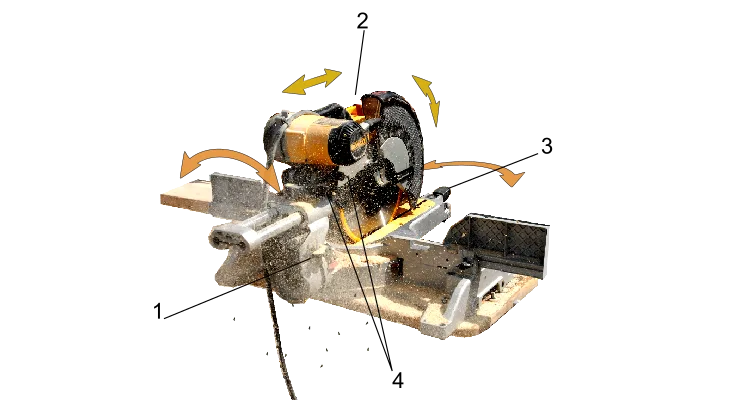
A sliding head is worth having when you need the same cut many times over. On some saws, a sliding feature allows for fast, repetitive cuts. [1] That speed matters when you work through a stack of identical parts rather than one piece at a time.
Where it pays off
A sliding head suits jobs where the length repeats:
-
Long boards cut to one length, such as fence rails or deck boards.
-
Trim work, where you cut many pieces to the same length.
-
Batch parts for a project, such as a set of shelves or a run of door stops.
If you cut a dozen boards to the same length, you set your stop once and move through the stack. You spend less time measuring and marking between cuts, which is where the speed comes from.
Where it does not help
A sliding head does not make a cut accurate by itself. It makes repeats faster, but a loose or misaligned slide can still give you slightly different lengths. If most of your work is one-off pieces, a fixed-head saw can handle the job with less setup.
Check the slide before you rely on it
Check that the slide stays square and locks firmly before you rely on it. A slide that drifts sideways or does not lock will give you a different length on every board, even when the stop is set correctly.
Lock the head, then make one cut on scrap and measure it against your square. If the cut matches, the slide is ready for the real stack.
How do miter and bevel settings keep angles consistent?
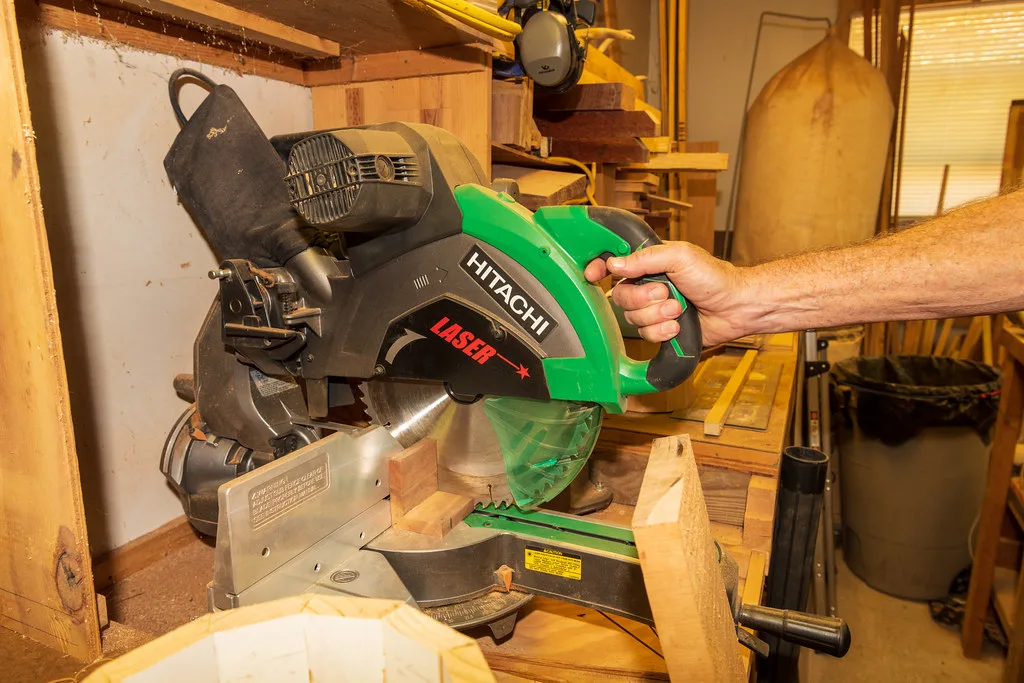
A compound miter saw is the tool to choose when you need precise angled cuts. It tilts the blade for bevel cuts and swings it sideways for miter cuts, so one saw covers both jobs. [1]
A miter cut angles across the width of a board, such as the corners of a picture frame. A bevel cut tilts the blade so the cut angles through the thickness, such as the edge of a tabletop or a shelf.
The saw also lets you combine both angles in one pass. Combining angle and bevel cuts in a single motion is useful for joinery such as compound-angle crown molding, where the board needs both settings at once. [2]
Why it belongs on the list
Few saws handle angled work this directly. A compound miter saw keeps the angle settings in one place, so you do not have to re-mark and re-cut each piece by hand. That is what makes the angles repeat from one board to the next.
Who it suits
-
Trim carpenters who cut many matching corners and edges.
-
Hobbyists building frames, boxes or angled joints.
-
Anyone who needs the same miter on several parts of one project.
If your work is mostly straight rips, a compound miter saw is not the best fit. A table saw handles those more directly.
Safety first
Keep your hands clear of the blade path at all times. Let the blade stop completely before you lift the head, and do not reach under the guard to pull off a cutoff.
Does the blade affect how repeatable a cut is?
Yes, the blade affects how repeatable a cut is. A blade that tears or burns the edge gives each piece a slightly different finish, so the blade deserves as much attention as the saw.
Pick a blade that protects the material
The best table saw blades are the ones that don’t damage the material you’re cutting [3]. That matters for repeatable work, because a blade that chips, tears or burns the edge leaves every piece looking a little different.
Say you’re cutting twelve pieces of trim for one room. If the first few come off clean and the rest show torn fibers, the pieces won’t sit the same way against the wall, and you’ll spend extra time sanding and fitting.
Crosscut or ripping blade
Blades come in types such as ripping and crosscut blades [3]. The type should match the direction of the cut:
-
Crosscut blades suit cutting across the grain, such as trimming a board to length.
-
Ripping blades suit cutting along the grain, such as reducing a board to width.
Using the right type keeps the edge clean and the length or width steady. A ripping blade used for crosscuts, or the reverse, tends to leave a rougher edge that is harder to repeat from one piece to the next.
Match tooth count and type to the material
Match the blade tooth count and type to the material for consistent results. A blade that works well on framing lumber may leave too rough an edge on trim or plywood, so pick the blade for the material in front of you.
For a run of identical pieces, use one blade for that material from start to finish. Swapping blades partway through can change the edge and the fit, even when the saw settings stay the same.
What does a lab-tested miter saw look like in practice?
One lab test named the DeWalt 12-Inch DWS780 the most capable miter saw it tested [4]. For you, that makes it a useful starting point for a shortlist, not a final answer for your shop.
What the ranking rewards
-
Ranking: top of the miter saws the lab tested [4]
-
Model: DeWalt 12-Inch DWS780 [4]
-
Focus: cutting power and precision [4]
The test highlighted cutting power and precision [4]. Cutting power is how well a saw gets through thick or dense stock without slowing or bogging down. Precision is whether the cut lands on your mark, which matters most when several pieces must match.
Both qualities affect repeatability. A saw that drives cleanly but drifts off its line forces you to re-measure every piece. A saw that holds its line but struggles through hardwood makes every board harder to finish.
Who this ranking suits
This model deserves a close look if you cut a lot of trim, molding or framing lumber and want one saw for steady work. It is a better fit for regular use than for an occasional project.
If your projects are mostly small craft pieces, you may not need that much capability. In that case, compare less expensive models on the features that match your cuts.
How to use the ranking
Use the ranking to narrow your list, not to make the final decision. List the cuts you repeat most, such as crosscuts to one length or angled trim, and check each candidate against them. Related reading: Most Durable Saws for Jobsite Use: What Contractors Should Know.
Before you cut the final parts, make one test cut on a scrap piece. If the cut lands where you marked it and the length matches your stop setting, the saw is doing its job for that work.
Which saw should you pick for your project?
If you need many identical crosscuts, a sliding compound miter saw fits best. A crosscut is a cut across the width of a board, such as trimming a stack of trim pieces to one length. This saw type is listed for making quick, clean and repeatable crosscuts [2], which is exactly what a repeat job asks for.
For angled joinery
When your parts need precise angles, pick a compound miter saw with easy bevel settings. Compound miter saws excel at precise miter and bevel cuts [1]. A miter is the angle across the board, and a bevel is the tilt of the blade, so a saw that sets both is handy for picture frames and box corners.
Cutting precision angles for joinery is one of the listed uses [2]. Set the miter and bevel once, then cut every matching part at those same settings so the joints close up.
For straight rips
For straight rips at a repeatable width, a table saw with a good fence and the right blade is the better choice. The fence is the guide that sets how wide each strip comes off the blade. Because the fence does the measuring, you set it once and cut each strip without re-marking the board.
Blade choice matters just as much. The best table saw blades are the ones that don’t damage the material you’re cutting [3]. Ripping blades and crosscut blades are separate types [3], so pick the one that matches the cut you make most often.
Matching the saw to the cut
Use a sliding compound miter saw for repeat crosscuts, a compound miter saw for angles, and a table saw for rips. Each one does its job best on the cut it was built for, so the right choice depends on what you cut most often.
What to remember before you buy
Before you buy, pick the saw whose features match the cuts you make most often. Look for a stable or sliding head, positive angle settings and a blade suited to the material. Those three features do more for repeatable cuts than the price tag does, so compare models on them first.
Then test the setup before you cut the final parts. Make a few cuts in a scrap piece of the same material, measure each one, and adjust the stop or fence until every piece matches. Once a scrap test lands the same length and angle every time, cut your real stock with confidence.