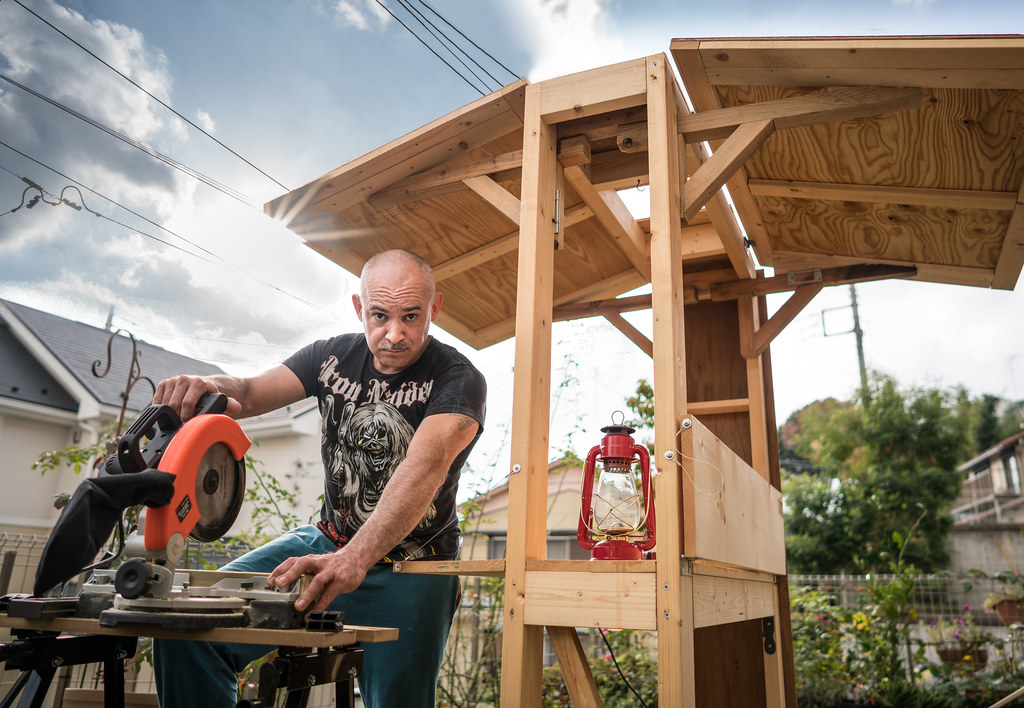
A saw for thick timber beams is usually a large circular saw or a purpose-built beam saw, provided its cutting depth suits the job. For a substantial beam, compare the saw’s depth of cut with the beam’s thickness and the direction you need to cut; a listed beam saw, for example, can cut timbers up to 6 3/8 inches in one pass. [1]
That capacity is a model-specific example, not a standard you can assume every beam saw meets. If you are cutting across a beam, compare the depth with its dimension at the cut; for a lengthwise cut, check the dimension the blade must pass through instead. Choose based on the actual cut, not the tool’s name or appearance. For the next step, see Best Saw for General Home Projects: What to Choose.
Before choosing, picture the cut on the beam: mark the line and identify how much timber the blade must pass through from the saw’s starting position. Then check the exact saw’s stated capacity against that measurement. A purpose-built beam saw may suit substantial stock, while a large circular saw can be practical when its capacity fits; neither label alone tells you whether the saw can complete your planned cut.
Match the saw to the cut you need
Match the saw to the cut by checking the exact model’s stated cut depth and bevel capacity before you choose it. A saw’s size alone does not tell you whether it can make the cut you need, so compare the manufacturer’s specifications with your planned cut and angle.
For example, if you need an angled cut across a beam, check the model’s bevel capacity as well as its cutting depth; a saw that suits a straight cut may not have the capacity for the bevel. Read the specifications for the exact model rather than relying on a broad label such as “large” or “beam saw.” Learn more in Miter Saw Advantages for Precise Angled Cuts.
A large saw can have substantial cutting capacity, but high torque can make it bind if you do not have a secure grip. [2] Treat that power as a handling concern, not as a reason to push harder: if the saw starts to bind, stop and reassess rather than forcing it through the timber.
If you are ripping thick stock and the job suits hand cutting, a large rip hand saw is another option. [3] For example, it may suit a straight rip when you can comfortably control a long hand stroke and are willing to work at a hand-saw pace. If the cut, stock, or your skill level makes that approach a poor fit, choose a suitable powered saw instead.
When one pass is not enough
If the beam is deeper than the saw can cut, don’t assume a single-pass rating applies to a cut made from another direction. A multi-pass cut may be possible, but only if you can keep the cuts aligned and the beam supported throughout; if you can’t, ask an experienced operator to take over.
For example, a beam may be too deep for one cut across its full thickness. Cutting from opposite faces can leave a ridge if the saw drifts off the first cut line, so mark the intended cut clearly and check alignment before continuing. Do not proceed with a multi-pass approach if you cannot hold the saw steadily or keep the work stable.
For occasional work, decide whether you can make the cut accurately with the equipment and help available. For repeated or production work, choose equipment by considering the timber dimensions, power requirements, and how much cutting you expect to do; those are core factors in selecting an industrial beam saw. [4]
If you are comparing equipment for ongoing jobs, write down the largest beam you expect to cut, the cut direction, and the expected work volume. Use those needs to narrow the options, and get advice from an experienced operator when you are unsure whether a multi-pass setup is manageable.
Set up the cut before you start
Before starting, make sure the beam is supported and secured so it cannot move or pinch the blade. A heavy beam can shift as the cut progresses, so plan where its weight will rest and how the two sides will be supported; do not leave a section free to drop or press inward on the blade.
Use stable supports that keep the beam from rocking, and clamp it where you can do so without obstructing the cut. For example, if you are crosscutting a long beam, support both sides of the cut and secure the piece so it cannot roll. Recheck the setup before powering on, especially if the beam is uneven or the supports could move.
Keep the saw’s guard in place and operating as designed. Hold the saw firmly with both hands when the tool calls for a two-handed grip; high-torque saws can bind if you do not maintain a good grip. [2] If the blade binds, stop rather than forcing the saw through the cut.
Do not start a cut you cannot control from beginning to end. If the beam is too large to support securely, or you cannot keep the saw and material under control, have a qualified operator handle the job. A second person can help manage a beam, but do not rely on someone holding it by hand in place of secure support.
Choose capacity and control over size alone
Choose a beam saw or large circular saw only if its stated capacity covers your planned cut; if you cannot confirm capacity or control, stop and get suitable equipment or professional help. A saw that is physically large is not automatically the right choice for a particular beam.
Before cutting, write down the beam’s dimensions and the cut you need, then compare them with the exact saw’s stated capacity. For example, if you are making a crosscut through a thick post, verify that the saw is rated to reach through the material in that setup; do not guess from the blade’s size or the tool’s appearance. Beam-saw selection depends on material, cutting capacity, power requirements, and production needs, so match the equipment to the work rather than choosing by size alone. [4]
If the rating is unclear, the beam exceeds the saw’s capacity, or you cannot keep the tool under control, do not force the cut. Set the work aside and choose equipment suited to the cut, or ask a qualified professional to make it. That is the safer next step than trying to compensate with an uncertain setup.
The key is a verified match between the saw’s stated capacity and your cut. Check the exact model’s specifications before you begin, and get help if either capacity or control remains uncertain.