An angle grinder is a handheld power tool with a spinning disc, and you can use it to cut, grind and polish metal and other hard materials. [1] The tool itself stays the same from job to job: the disc you mount on it decides what it does, so one grinder can cut a bolt in the morning and clean a weld in the afternoon.
That range is why angle grinders are used widely in metalworking and construction, and why you’ll find them in workshops and service garages. [2] If you’re deciding whether one fits your project, the useful questions are which materials it handles, which disc each task needs, and where a saw would give you a cleaner result.
Key takeaways
-
An angle grinder cuts, grinds and polishes
-
Changing the disc changes the job
-
Some cuts, especially in wood, are better done with a different tool
Can an angle grinder cut metal, tile and masonry?
Yes. With the right disc fitted, an angle grinder cuts steel, tile, brick and concrete, and cutting is one of the main jobs it was built for [1]. The disc does the work, so the question is which disc goes with which material.
Metal: rebar, bolts, sheet metal and pipe
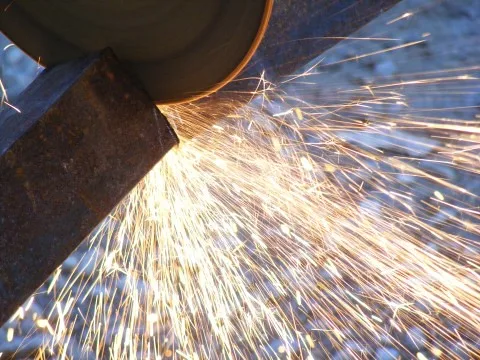
For metal, fit a thin abrasive cut-off wheel. It slices through a seized bolt on a trailer hitch, a length of rebar sticking out of a footing, a sheet of steel roofing or a rusted pipe under a sink. The thin wheel removes only a narrow strip of material, so it cuts faster and puts less strain on the motor than a thick grinding wheel.
Let the wheel’s speed do the cutting. Pushing hard slows the disc, heats the metal and wears the wheel down faster. For a bolt or rebar, cut from the top down in one steady pass. For pipe, rotate the pipe and cut around it rather than forcing the wheel through the full diameter at once.
Tile, brick and concrete: use a diamond blade
Masonry needs a diamond blade, a steel disc with diamond grit bonded to its rim. It grinds through ceramic or porcelain tile, pavers, brick and concrete. Typical jobs include notching a floor tile around a pipe, scoring a paver to fit a patio edge or cutting a slot in a concrete slab. Expect a lot of fine dust with masonry, so work outdoors or with dust control where you can.
Rescue and heavy-duty cutting
Grinders are tough and portable enough for emergency rescue work [2]. Crews use them to cut through metal such as locks, bars and vehicle parts when every minute counts.
Cutting safely
A cut-off wheel spins fast and throws sparks and fragments, so set up before you pull the trigger:
-
Keep the guard on and positioned between the disc and your body.
-
Wear safety glasses plus a face shield, since a broken disc or a spray of sparks can reach your face.
-
Hold the grinder with both hands, one on the body and one on the side handle, so you can control it if the disc binds.
-
Aim sparks away from sawdust, rags, fuel cans and anything else that can catch fire, and clear the area before you start.

Grinding welds, edges and rough spots
A grinding wheel or flap disc turns a rough, sharp or lumpy piece of metal into something smooth and usable. Grinding is one of the angle grinder’s core jobs alongside cutting and polishing [1], and it covers three common tasks: knocking down welds and burrs, sharpening tools, and blending or shaping metal.
Smoothing welds and burrs
A grinding wheel is a thick, rigid disc made for removing metal. You hold it at a shallow angle to the work and let it shave material away a little at a time.
Typical jobs include:
-
A raised weld bead on a gate hinge or trailer bracket that needs to sit flush
-
Sharp burrs left on the end of a steel pipe or angle iron after cutting
-
Spatter and lumps around a repair weld on a lawn tractor deck
-
The jagged edge of a bolt you just cut, so a nut threads on again
Keep the grinder moving across the surface instead of holding it in one spot. Staying in one place digs a hollow and heats the metal, which can discolor it or weaken a thin part.
Sharpening mower blades and axes
A grinder sharpens a dull mower blade or a nicked axe much faster than a hand file. It works well for tools that need a working edge rather than a razor edge.
For a mower blade, clamp it in a vise and follow the original bevel with light passes. Work both cutting ends evenly so the blade stays balanced and doesn’t shake the mower. For an axe or maul, grind out chips and restore the bevel, then finish with a file or stone if you want it keener.
Use a light touch. Heavy pressure overheats the edge, and a blue tint on the steel means it got hot enough to soften.
Blending and shaping with flap discs
A flap disc is made of overlapping strips of abrasive, and it leaves a smoother finish than a grinding wheel. Reach for one when looks matter, such as blending a ground weld into the surrounding metal on a railing or rounding over the sharp corners of a homemade bracket.
A flap disc also flexes slightly, so it follows curves and contours better. Many people grind a weld down with a wheel first, then switch to a flap disc to blend and smooth it.
Polishing, rust removal and paint stripping
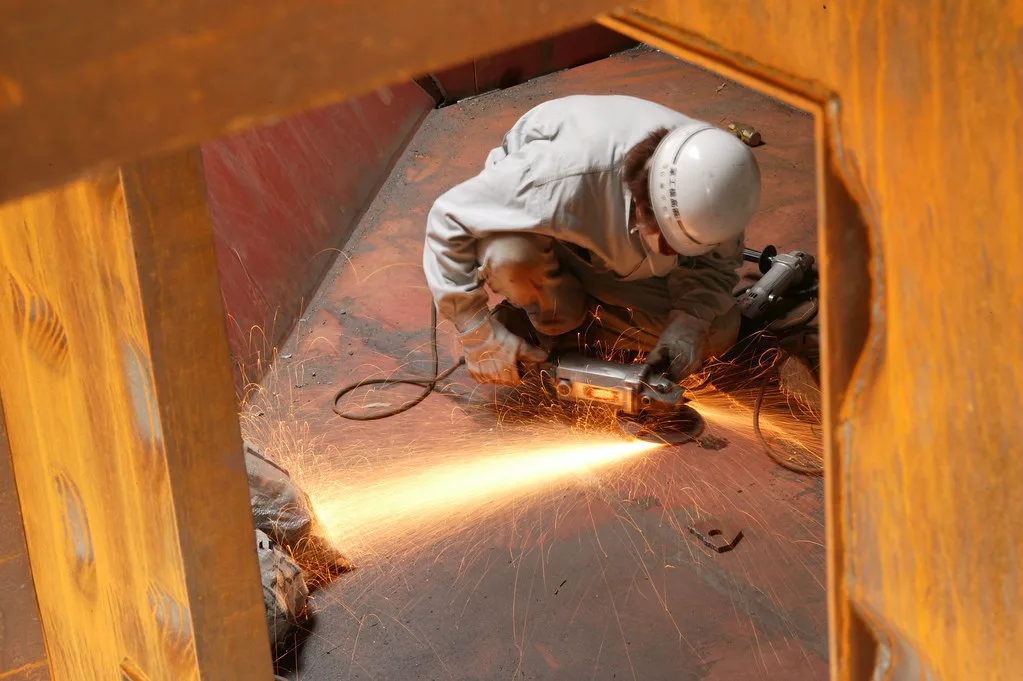
Swap the cutting or grinding disc for a brush, pad or sanding disc and the same grinder cleans and finishes metal. Polishing is one of the main jobs these tools are built for, alongside cutting and grinding [1]. Fitting the right attachment is what turns a rusty gate or a dull bumper into a job you can finish in an afternoon.
Wire brushes for rust and flaking paint
A wire cup brush or wire wheel brush strips rust, loose paint and scale off metal. The twisted or crimped wire bristles knock off anything that isn’t firmly bonded and leave the sound surface behind. You can strip a rusty trailer hitch, wrought-iron railing or old garden tool back to bare steel before you repaint it.
The two shapes suit different surfaces:
-
A cup brush has bristles facing forward like a bowl, so it covers flat areas fast, such as a steel plate or the side of a toolbox.
-
A wheel brush has bristles around its rim, so it reaches into corners, edges and the gaps between railing bars.
Let the bristle tips do the work. Pressing hard bends the wires flat and slows the job down.
Polishing pads for a shine
A polishing pad brings up a shine on metal once the surface is clean and smooth. You might use one on aluminum trim, a stainless steel sink edge or a chrome part that has gone dull. Most people work in stages, from a coarser pad or compound to a finer one, and each pass leaves a brighter finish.
Keep the pad moving across the surface instead of holding it in one spot. Dwelling in one place builds heat and can leave swirl marks or discoloration on thin metal.
Sanding discs for smoothing
A sanding disc smooths surfaces between rough stripping and final polishing. After a wire brush clears off rust, a sanding disc evens out pitting and brush marks so paint or polish goes on cleanly. Start with a coarse grit to level the surface, then move to a finer grit for a smoother feel.
A typical refinishing job runs in that order: wire brush to strip, sanding disc to smooth, then polishing pad if you want a shine instead of paint.
Which disc does each job need?
Each grinder job has its own disc, so the disc you mount decides what the tool does. An angle grinder handles cutting, grinding and polishing, and the table below matches each common disc to the job it’s built for. [1]
|
Disc |
Main job |
Typical materials |
Use on the face (side) of the disc? |
|---|---|---|---|
|
Cut-off wheel |
Straight cuts |
Rebar, bolts, sheet metal, pipe |
No, cut with the edge only |
|
Diamond blade |
Cutting hard, gritty material |
Tile, brick, concrete, stone |
No, cut with the edge only |
|
Grinding wheel |
Heavy stock removal |
Welds, burrs, rough edges |
Yes, at a shallow angle |
|
Flap disc |
Grinding and blending in one step |
Weld seams, edges you want smooth |
Yes, held fairly flat |
|
Wire brush (cup or wheel) |
Cleaning surfaces |
Rust, flaking paint, scale |
Yes, it works across the surface |
|
Polishing pad |
Bringing up a shine |
Metal surfaces after sanding |
Yes, held flat |
The split is simple: thin wheels cut, thick wheels and flap discs remove metal, and brushes and pads clean and finish. A flap disc is the most forgiving choice for beginners who want to grind and smooth without switching discs. Wire brushes and polishing pads take off very little material, so they won’t fix a deep gouge.
Match the disc to your grinder’s speed
Every disc is marked with a maximum safe speed in RPM, and that number has to be equal to or higher than the speed on your grinder’s nameplate. Also match the disc diameter to the grinder: a 4-1/2 inch grinder takes 4-1/2 inch discs, so its guard and speed suit that size.
Keep thin discs for cutting only
Cut-off wheels and diamond blades are made to take force along their edge, straight into the cut. Pressing the flat face of a thin wheel against a weld to grind it puts sideways load on a disc that isn’t built for it. If you need to clean up a cut edge, stop and swap to a grinding wheel or flap disc before you start.
When a different tool does the job better
Reach for a saw when the cut has to be straight, long or clean, because a grinder is built for rough work and short cuts. A grinder held freehand wanders, leaves a wide kerf (the slot the blade removes) and burns or chips the edge. For most cuts in wood, and for long cuts in metal, a saw gives you a better result with less cleanup.
Straight cuts in wood
A circular saw is the tool for straight cuts in plywood, 2x4s and decking boards. You can run it along a clamped straightedge or a speed square and get an edge that is ready to use. Ripping a 4-foot sheet of plywood with a grinder would leave a ragged, scorched line that you would still have to sand or plane.
A jigsaw handles curves and cutouts in wood, such as a rounded shelf corner or a hole for a sink in a countertop. Its narrow blade follows a pencil line, which a grinder disc cannot do.
Long, precise cuts in metal
A chop saw is the better choice when you need square, repeatable cuts in metal, such as cutting a dozen pieces of steel tube to the same length for a frame. The saw pivots down on a fixed arm, so every cut lands at the same angle and you can set a stop for the length.
A reciprocating saw works well for long cuts in place, like cutting out an old cast iron drain pipe or slicing through a rusted bolt you can’t reach with a chop saw. It is faster than a grinder on thick material and throws far fewer sparks. A grinder still wins for a quick cut on a single bolt or a short length of rebar.
Carving wood with a grinder
Carving discs for grinders exist, but they carry a high risk of kickback, where the disc catches the wood and throws the tool back toward you. Wood grain is uneven, so a toothed disc can bite hard without warning. If you are new to grinders, skip wood carving entirely and use a chisel, a rasp or a rotary tool for shaping small pieces.
Getting started with your grinder
Pick the disc that matches your first real project, buy that one, and leave the rest for later. If you need to cut a rusted bolt off a trailer hitch, a cut-off wheel is all you need today. If you’re cleaning up a garden gate before repainting, start with a wire cup brush.
Your kit can grow one job at a time. The grinder handles cutting, grinding and polishing, so the tool you already own covers more work as you add discs [1]. When a new task shows up, such as sharpening a mower blade or smoothing a weld, add the disc for that job. Learning one disc well before moving to the next also builds your control and confidence.