For most wood projects, the Pro Grade 5-piece set is the first pick for applying polyurethane, because its five flat and angled brushes run from 1 inch to 2.5 inches and cover everything from narrow spindles to cabinet doors. The bristles matter as much as the brush: use a natural bristle brush with oil-based polyurethane and a synthetic bristle brush with water-based polyurethane [1].
That bristle match is what keeps your topcoat smooth on a tabletop or a stair rail. For rough jobs where you don’t want to clean up afterward, such as a fence or deck, a cheap chip brush makes sense, and some are sold as disposable.
Below you’ll find five brushes, what each suits best, and how to choose the right width and bristle for your finish.
As an Amazon Associate we earn from qualifying purchases.
How we picked: from products sold on Amazon for this need, compared by what their makers state and what buyers report in their reviews.
The Picks at a Glance
Product | Best for | Size | Item weight | Weight | Buyer rating | |
|---|---|---|---|---|---|---|
Pro Grade 5-Piece Brush Set | furniture and cabinet projects | 5pk Soft | 3.2 ounces | 3.2 ounces | 4.6 of 5 (72,664 reviews) | |
Magimate 3-Inch Chip Brush | large flat surfaces | 3 in | 3.52 ounces | 3.52 ounces | 4.5 of 5 (238 reviews) | |
Newkita 3-Piece Chip Brush Set | budget DIY jobs | Small | — | — | 4.5 of 5 (1,717 reviews) | |
Genixart 3-Inch Chip Brush | fences and decks | Large | 0.08 kg | — | 4.6 of 5 (958 reviews) | |
Pro Grade 2-Inch Angled 3-Pack | trim and edges | 3Ea H 2A | 4 ounces | 4 ounces | 4.6 of 5 (6,472 reviews) |
Buyer ratings as shown on Amazon on November 15, 2026; they change.
Pro Grade 5-Piece Brush Set: Best for furniture and cabinet projects

This set suits you if you finish furniture and cabinets, where one piece can have wide panels, narrow rails and tight inside corners. It has five brushes: a 1 in flat, 1.5 in angle, 2 in flat, 2 in angle stubby and 2.5 in angle. With that spread, you can lay polyurethane on a tabletop with a flat brush and switch to an angle brush for the apron and legs without leaving the job.
The 2 in angle stubby has a short handle meant for tight cabinet interiors, inside corners and detailed trim where a standard angle brush is too long. That helps when you are coating the inside of a cabinet box and your knuckles would otherwise hit the shelf above. The 1 and 2 in flat brushes are made for broad coverage on furniture, shelving and doors, and polyurethane is one of the finishes they are made to apply.
The maker says each bristle is held with adhesive bonding inside a coated steel ferrule, so bristles stay in the brush instead of in your finish. The filaments are synthetic, and the brushes are washable and reusable for more projects. For you, that means one purchase can carry you through several furniture builds.
Pros
Five sizes cover panels, rails and corners on one piece
Stubby angle brush reaches inside cabinet boxes
Buyers say the soft bristles leave a smooth finish, even on furniture
Buyers say the range of sizes handles both large panels and narrow spindles
Cons
Some buyers report bristles falling out while painting, which can leave hairs in a wet poly coat
Using several sizes in one coat means several brushes to clean before the finish hardens in them
If you only need a brush for cutting in along trim and edges, the Pro Grade 2-Inch Angled 3-Pack is a simpler fit.
Magimate 3-Inch Chip Brush: Best for large flat surfaces

The Magimate 3-inch chip brush is the pick when you are coating big, flat areas like tabletops, doors or fence boards. The maker lists a flat, straight head 3 inches (76 mm) wide, rated for varnish, stain and polyurethane, with synthetic PBT bristles. That width lets you lay down long, even strokes across a wide panel with fewer passes and fewer lap marks.
Synthetic bristles are the usual match for water-based polyurethane [1]. The bristles are epoxy-secured and work with water-based or oil-based finishes, so one brush can handle a water-based poly coat on a tabletop and an oil-based stain on a fence later. The epoxy setting also matters on a clear finish, where a stray bristle stuck in the coat is easy to see.
The brush cleans up with water or solvents depending on the finish, and you can wash it and hang it to dry. That makes it reusable, unlike chip brushes you throw away after one job. It weighs 3.52 ounces and has a wooden beavertail handle, so it stays light in your hand during a long session on a big surface.
Pros
A 3-inch head covers wide panels quickly
Bristles work with water-based and oil-based finishes
Buyers say it applies finishes smoothly and is easy to clean
Buyers find the bristles soft and the brush good value
Cons
The 3-inch width is too wide for trim, edges and detail work, so it is awkward on moldings or chair spindles
It comes as a single brush in one size, so you need a second brush for narrow parts of a project
If your project is mostly trim, edges and corners, the Pro Grade 2-Inch Angled 3-Pack fits better.
Newkita 3-Piece Chip Brush Set: Best for budget DIY jobs

The Newkita set is for DIYers who want cheap, synthetic-bristle brushes for small finishing jobs and touch-ups. You get three chip brushes in different sizes with wooden handles and synthetic bristles. The maker says they work with stains and varnishes on cabinets, fences, decks and other wood.
Three sizes in one pack mean you can use the smallest brush on a chair spindle and a larger one on a shelf face without buying separate brushes. Because the bristles are synthetic, these brushes fit better with water-based polyurethane than with oil-based finishes.
Cleanup is simple: the maker says to wash them while they are still wet using soap and water. For water-based poly that means rinsing at the sink right after a coat, before the finish dries in the bristles. The maker also tells you to brush the bristles with your fingers before use to pull out any loose ones so they don’t end up in your finish. Take a minute for this before the first coat, because a stray bristle stuck in drying polyurethane is easy to miss.
Pros
Three sizes cover small parts and wider boards
Soap-and-water cleanup when washed wet
Buyers say the set is good value for the money
Buyers report the soft bristles apply smoothly without streaks
Cons
Buyers complain the brushes shed bristles while painting, which shows up in a clear finish
Buyers say the brushes wear out and don’t last long, so plan on replacing them
Synthetic bristles are a poor match for oil-based poly
If you finish fine furniture or cabinets often and want brushes built for repeat use, the Pro Grade 5-Piece Brush Set fits better.
Genixart 3-Inch Chip Brush: Best for fences and decks
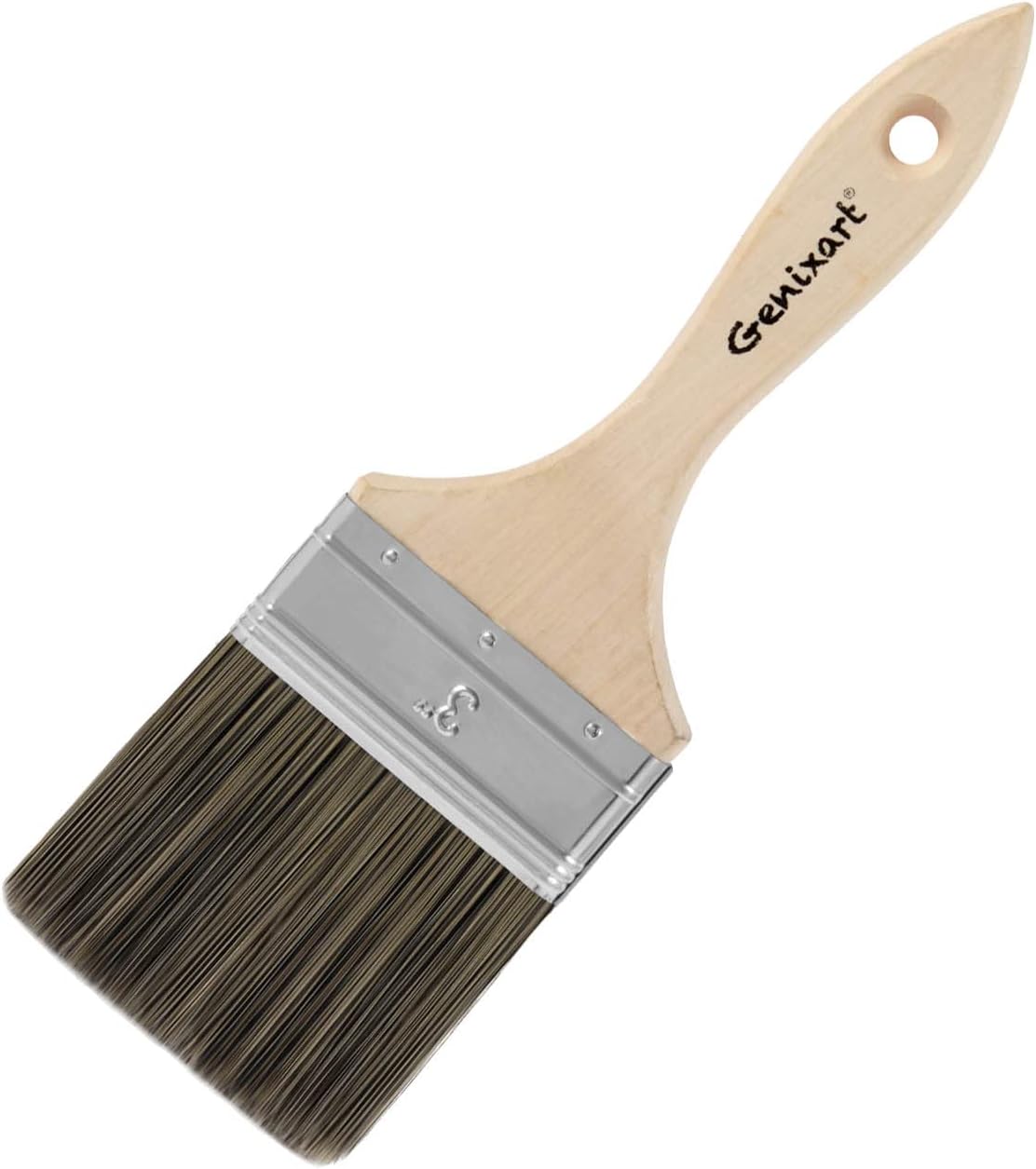
If you have a fence, deck or other rough outdoor wood to seal, this Genixart brush is a good fit because it is wide, cheap to replace and made for exterior work. The maker lists it at 3 inches (75 mm) wide and says it works as a varnish brush, fence brush and deck stain brush. It is also a disposable brush suitable for both interior and exterior painting.
The 3-inch head lays down a broad stroke, so you cover fence pickets and deck boards in fewer passes than with a 1- or 2-inch brush. Soft synthetic bristles handle both water-based and oil-based finishes, polyurethane included, so you can use it with whichever poly you bought. At 0.08 kg it is light, which helps on a long afternoon of staining rails.
Because it is sold as a disposable brush, you can toss it after a messy outdoor coat and skip the solvent cleanup. The bristles are set in the ferrule with epoxy, and the wooden handle is sanded smooth for a comfortable grip. If you do want to rinse it, the maker says to wash it with water or solvent to match the finish, then hang it to drip-dry.
Pros
A wide 3-inch head speeds up fences and decks
Works with oil-based and water-based poly
Buyers say it spreads stain smoothly on decks
Buyers find it better made than its cost suggests
Cons
Buyers report bristles falling out during use, which shows on a smooth finish
Buyers say it is thinner than a “double thick” brush led them to expect
It is built as a disposable brush, so plan on one per job
For fine furniture or cabinets where loose bristles would ruin the surface, the Pro Grade 5-Piece Brush Set is the better choice.
Pro Grade 2-Inch Angled 3-Pack: Best for trim and edges

This 3-pack suits you if most of your polyurethane work is along trim, baseboards and corners, where a wide brush would slop finish onto the wall. The maker sells three 2-inch angled sash brushes in the pack, designed for clean, sharp lines around trim, baseboards, ceilings, corners and detailed edge work.
The angled tip is what helps on edges. You lay the long side of the bristles into a corner or along a door casing and draw a straight line of finish without taping. The 2-inch width is narrow enough to control on a 3-inch baseboard and still carries enough finish to keep a wet edge.
The maker lists synthetic filaments that work with latex paint, oil coatings and wood stains, plus medium stiff, flagged bristles. Flagged bristles have split tips, which spread a thin coat more evenly and help you avoid brush marks in a clear finish. Having three identical brushes means you can keep one for each coat or each room. You can also set aside a brush that is still drying and pick up a clean one instead of rushing the cleanup between coats.
Pros
The angled 2-inch sash shape gives you control in corners and along trim
Three brushes in one pack for repeat jobs or multiple coats
Solid wood handles
Buyers say the angled brush cuts in neatly around ceilings, trim and doorways, and that the brushes are easy to clean
Cons
Some buyers report bristles falling out during use, and a stray bristle shows up clearly in a clear polyurethane coat
All three brushes are the same 2-inch size, so tabletops, doors and other big panels take many more passes and are harder to keep wet
If you also coat cabinet doors or furniture tops, the Pro Grade 5-Piece Brush Set gives you wider sizes alongside an angled brush.
How do you pick a brush for a polyurethane finish?
Start with the finish you’re using, because it decides the bristle type. For oil-based polyurethane, reach for a natural bristle brush, usually made from animal hair. For water-based poly, use a synthetic bristle brush. [1]
Woodworkers who brush oil-based poly put it plainly: use a good quality oil brush with china bristle, and skip a water-based latex brush unless your finish is water-based too. [2] So if the can says oil-based and your brush rack holds only latex wall brushes, buy a china bristle brush before you start.
Width comes down to the surface in front of you. A 1 to 2 inch brush gives you control on trim, edges and narrow spindles, where a wide brush would slop finish onto the next face. A 3 inch brush covers tabletops, cabinet panels and deck boards in fewer strokes, so each pass blends into the last while it’s still wet.
The last choice is reusable or disposable. For fine furniture, a well-made brush you clean and keep pays off over many coats. Chip brushes are inexpensive and fine for rough work such as a fence or deck. One 3 inch chip brush is sold as disposable and rated for interior and exterior use, so you can toss it when the job is done.
Which brush to buy first
The Pro Grade 5-Piece Brush Set is the first pick for mixed wood projects, because one box covers small trim work and wider panels on furniture, cabinets and doors. If you build a dresser one weekend and refinish a door the next, you won’t need to buy a new brush for each job.
Before you buy anything, decide whether your can of poly is oil-based or water-based, then match the bristles to it: natural bristle for oil-based, synthetic for water-based. [1] Read the label on the can you already own, then choose the brush that fits it.


