The DEWALT DCW600B is the first pick among the best routers for woodworking if you want to cut without a cord. It runs on DEWALT’s 20V batteries, has a variable-speed dial so you can match speed to the bit and wood, and has an electronic brake that slows the motor faster after you shut it off. That brake means less waiting before you set the router down or change a bit. Related reading: Best Wood Router: What to Look for Before You Buy.
The right router for your shop depends on the work. A palm trim router like the Bosch PR20EVS Colt handles edges and light trimming, and a compact router like the AVID POWER model is built for jobs such as door hinges. A 2.25 HP router like the Bosch 1617EVS takes heavier cuts and mounts in a router table.
This article contains affiliate links, and we may earn a commission if you buy through them.
As an Amazon Associate we earn from qualifying purchases.
How we picked: from products sold on Amazon for this need, compared by what their makers state and what buyers report in their reviews.
The Picks at a Glance
Product | Best for | Maximum rotational speed | Item dimensions w x h | Item weight | Buyer rating | |
|---|---|---|---|---|---|---|
DEWALT DCW600B | cord-free routing | 25500 rpm | 5.82″W x 5.75″H | 4.2 lb | 4.8 of 5 (10,851 reviews) | |
Bosch PR20EVS Colt | edge trimming | 16000 rpm | 3.75″W x 7.5″H | 3.3 lb | 4.6 of 5 (3,524 reviews) | |
Bosch 1617EVSPK | plunge and edge work | 25000 rpm | 11.5″W x 11.6″H | 18.2 lb | 4.7 of 5 (5,007 reviews) | |
Bosch 1617EVS | router table use | 25000 rpm | — | 4.5 kg | 4.8 of 5 (3,563 reviews) | |
AVID POWER compact router | hinges and small jobs | 35000 rpm | 2.95″W x 9.05″H | — | 4.2 of 5 (127 reviews) |
Buyer ratings as shown on Amazon on November 14, 2026; they change.
DEWALT DCW600B: Best for cord-free routing

The DEWALT DCW600B is the router for you if you want to rout without dragging a cord across the workpiece or hunting for an outlet. It runs on a 20V lithium-ion battery and has a brushless motor. Its top speed of 25,500 rpm puts it in the same range as the corded 2.25 HP picks, so you are not trading much spinning speed for the freedom of going cordless.
It comes with a fixed base, which means you set the bit depth before you start and the bit stays at that depth through the cut. That suits edge profiles, roundovers and flush trimming. A variable-speed dial lets you slow the router down for larger bits or woods that scorch easily. At 4.2 pounds and about 5.82 inches wide, it is small enough to steer with one hand on a tabletop edge.
The maker adds a few touches that help in daily use. Dual LEDs light the work surface, so you can follow your pencil line inside a cabinet or a dim corner of the garage. A depth adjustment ring speeds up height changes between passes. The soft start keeps the router from jerking in your hands when you pull the trigger, and electronic feedback holds the speed steady as the bit bites into the wood. The electronic brake stops the bit sooner after you switch off, so you wait less before setting the tool down.
Pros
No cord to snag on the workpiece or the bench
LEDs and a depth ring make setup and sight lines easier
Buyers say it handles quarter-inch bits with plenty of power
Buyers find it light, compact and easy to control for detail work
Cons
It is sold as the tool only, so you need a DEWALT 20V battery and charger if you do not already own them
Fixed base only, so it cannot plunge into the middle of a board for stopped grooves or mortises
If you need plunge cuts as well as edge work, look at the Bosch 1617EVSPK instead.
Bosch PR20EVS Colt: Best for edge trimming
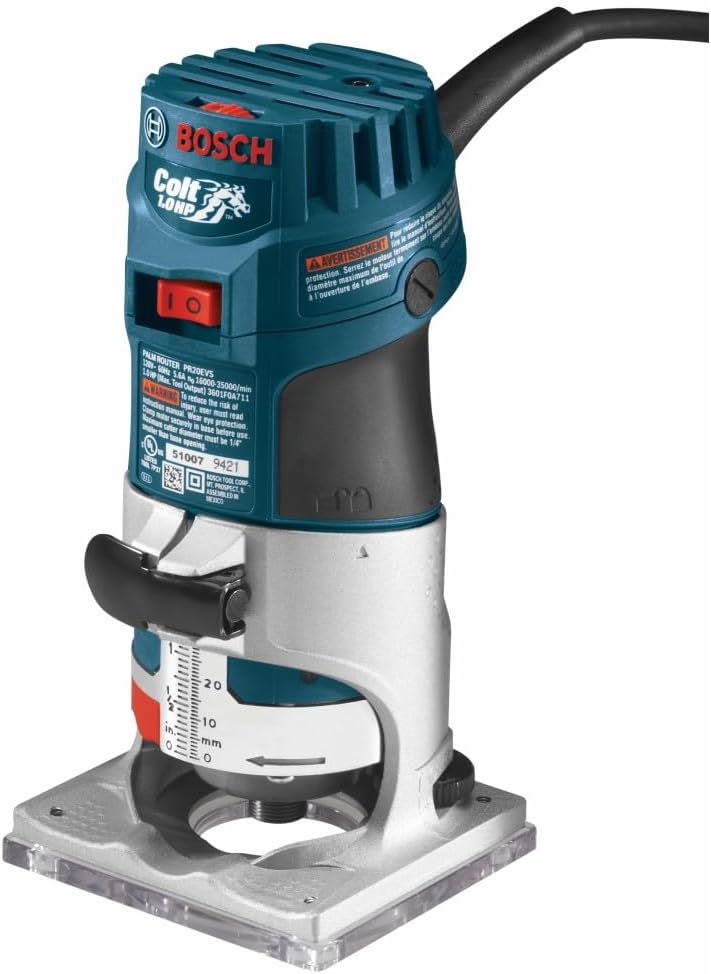
The Bosch PR20EVS Colt is the pick if most of your routing happens along edges: rounding over tabletops, flush-trimming laminate, or easing the corners on shelves. It is a trim router with a 1.0 HP, 5.6 amp variable-speed motor that runs from 16,000 to 35,000 RPM. That range lets you slow down for larger bits and speed up for clean passes with small ones.
The Colt comes with a straight edge guide that leads the router along the edge of your workpiece or up to 3-5/8 inch in from the edge. That is enough for a shallow groove or a decorative line set back from a board’s edge, without clamping a fence to the work. The cord leaves the motor at an angle, so it stays out of your path as you move along a long edge.
The base is aluminum and fixed, with finger support pockets for added stability when you trim edges. On a narrow edge, where a router can tip, those pockets give your fingers a steady place to hold. At 3.3 pounds, it is lighter than the 4.2-pound DEWALT DCW600B, so it is easier to hold for a long run of edge work.
Pros
The edge guide and angled cord keep edge passes simple
Buyers say the compact size makes it easy to handle
Buyers say it has plenty of power for small home projects
Cons
Some buyers report the motor burning out after about a month of use
Some buyers say the depth adjustment does not hold its setting reliably, which matters when you need repeated passes at the same depth
It has a fixed base only, so you cannot make plunge cuts that start in the middle of a board
If you need plunge cuts as well as edge work, the Bosch 1617EVSPK with its plunge and fixed bases fits better.
Bosch 1617EVSPK: Best for plunge and edge work

The Bosch 1617EVSPK is for you if you want one router that handles both plunge cuts and edge profiles. It comes with both a plunge base and a fixed base, and its 2.25 HP, 12 amp motor has the power for heavier cuts in hardwood. The speed dial runs from 8,000 to 25,000 RPM, so you can slow it down for large bits and run it fast for small ones.
The maker lists microfine bit-depth adjustment for fast, precise depth setting. In daily use, that means you can sneak up on an exact depth, say a dado that has to match your shelf thickness, instead of cutting and recutting. The plunge base gives precise depth control, so you can start a cut in the middle of a board for mortises or stopped grooves.
Constant Response Circuitry stabilizes start-up torque. That keeps the router from jerking in your hands when you switch it on, which matters with a motor this size. Rounded hardwood handles give you a secure grip. The 2-inch sub-base opening makes template loading easier, which helps if you rout to patterns. A threaded three-hole base pattern lets you mount it to a router table. The kit includes 1/4-inch and 1/2-inch self-releasing collets, wrenches and a carrying case.
Pros
Two bases in one kit cover plunge and edge work
Microfine depth adjustment for exact settings
Takes both 1/4-inch and 1/2-inch shank bits
Cons
It is corded, so you need an outlet or extension cord nearby.
At 18.2 pounds and 11.5 inches wide, the kit is much larger and heavier than a palm router like the Bosch PR20EVS Colt at 3.3 pounds, which makes light trim jobs more tiring.
If you mostly round over edges or trim laminate, the Bosch PR20EVS Colt is the lighter, easier choice.
Bosch 1617EVS: Best for router table use

The Bosch 1617EVS is the pick if you plan to mount a router under a table and leave it there. Its threaded three-hole base pattern is made for quick, secure mounting to router tables, and its 12 amp motor holds a steady speed while you feed stock through.
The maker lists constant response circuitry that stabilizes start-up torque and keeps speed constant under load. In a table, that means the bit stays at the same speed as you push a long hardwood board across it, so you get a cleaner profile with fewer burn marks from bogging down. The adjustable speed dial runs from 8,000 to 25,000 RPM, which lets you slow down for large-diameter bits and speed up for small ones.
The power switch is dust-sealed to protect internal components from woodworking dust. Under a table, the motor sits right where chips and dust fall, so a sealed switch matters more there than in handheld use. Microfine bit-depth adjustment lets you make small height changes between passes. The 2-inch sub-base opening makes template loading easier when you take it out for handheld jobs.
It comes with 1/4-inch and 1/2-inch self-releasing collet chucks, so it takes both common bit shank sizes. The router weighs 4.5 kg, which is heavier than the DEWALT DCW600B at 4.2 pounds, so expect more arm fatigue in long handheld sessions.
Pros
Threaded three-hole base pattern for table mounting
Constant speed under load
Buyers say the height adjustment allows fine micro-adjustments
Buyers find it a good quality basic tool for the money
Cons
Fixed base only, so you cannot make plunge cuts such as stopped grooves
Some buyers report it does not fit certain router table bases properly
Some buyers report units breaking down early
If you want plunge cuts from the same motor, the Bosch 1617EVSPK with both plunge and fixed bases fits better.
AVID POWER compact router: Best for hinges and small jobs
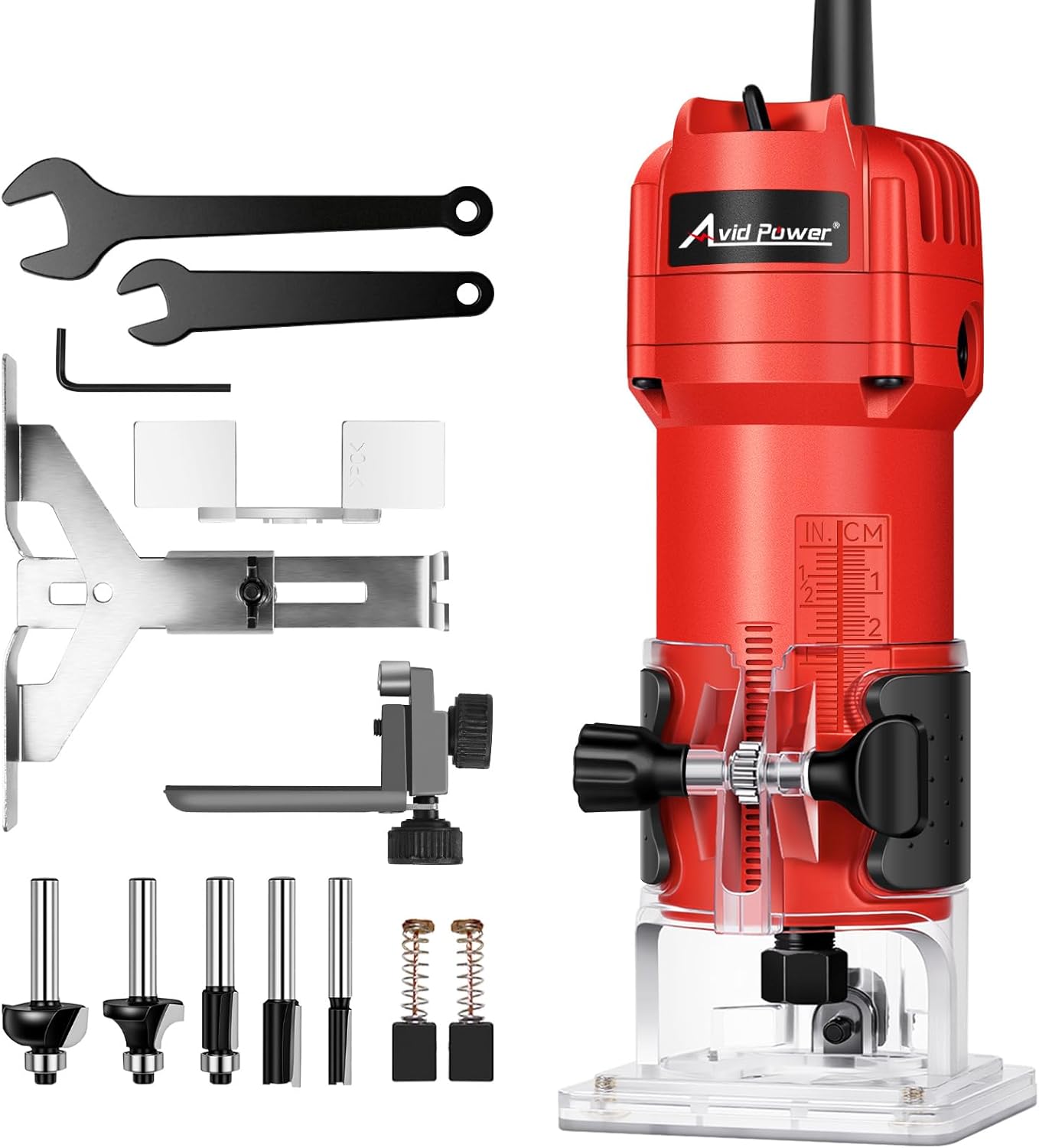
The AVID POWER compact router suits you if you mostly trim edges, cut hinge mortises in doors and handle small detail jobs on a budget. The maker lists a 630W, 5.3 amp motor spinning up to 35,000 RPM, with a straight guide and a roller guide in the box for trimming, slotting and door hinges.
It is also higher than the Bosch Colt’s 16000 rpm maximum. An air vent keeps the motor from overheating during longer sessions, which helps when you work your way around a full set of cabinet doors. The kit includes a 1/4″ collet, five 1/4″ shank trim bits and two wrenches for bit changes, so you can start routing without buying bits first.
The motor is brushed, and the maker includes a pair of replacement carbon brushes. Brushes are small carbon blocks that wear down with use. When they wear out you swap in the spares, which extends the router’s life with no repair shop involved. The fixed base has a depth adjustment system for setting bit height, and a rubber grip on the base helps you hold the tool steady.
Pros
Buyers say it is easy to use and quick to set up
Buyers say it gives good value for what it costs
Bits, collet, both guides and spare brushes come in the box
Cons
Buyers report inconsistent cutting and that it may not cut deep enough, a problem for heavier work
Some buyers report units that broke during first use
Fixed base only, so it cannot plunge into the middle of a board
If you want plunge cuts or heavier routing, look at the Bosch 1617EVSPK instead.
What to look for in a woodworking router
Start with the size of the job. A palm trim router, like the Bosch PR20EVS Colt with its 1.0 HP, 5.6 amp motor, is light enough to steer with one hand along an edge or around a hinge mortise. A 2.25 HP router with a 12 amp motor has the muscle for deeper cuts in hardwood and for running in a router table.
Next, pick the base. A fixed base holds the bit at one depth, which works well for edge profiles and table work. A plunge base lets you lower the spinning bit into the middle of a board for cuts like mortises or stopped grooves, and the Bosch 1617EVSPK comes with both bases. If a router table is in your plans, look for a threaded three-hole base pattern that bolts securely to the table plate.
Speed control comes next. A variable range such as 8,000 to 25,000 RPM lets you slow down for large-diameter bits and speed up for small ones. Soft start eases the motor up to speed instead of jerking in your hands, and constant speed under load keeps the cut clean when the bit meets dense wood.
Finally, decide between cord and battery. A cordless model like the DEWALT DCW600B runs on a 20V lithium-ion battery, so you can trim a deck rail without an extension cord. It ships with the fixed base, a wrench, a manual and the motor, with no battery in the box.
Picking your first router
The DEWALT DCW600B is the first pick for cord-free routing, since it runs on 20V batteries and gives you a variable-speed dial plus an electronic brake that slows the motor faster after you shut it off. That brake means less waiting before you set the router down or change a bit.
Before you buy, decide what your projects need. If you mostly round over edges and cut hinge mortises, a light trim router is easier to control with one hand. If you plan deeper grooves or a router table, look at a 2.25 HP model like the Bosch 1617EVS, which has a 12 amp motor.


