Hard maple is the safest pick for your first cutting board: it’s a dense wood that resists moisture and warping, and it’s relatively easy to work with. [1] Walnut, cherry and acacia are also good choices if you want a different color or feel. [1]
There’s no single winner, though. Some species suit one type of board better than another, and the final call often comes down to personal taste. [2] Zebrawood, for example, can look striking in end grain or face grain boards but less impressive in edge grain. [2]
Below, you’ll see what makes a wood work on a cutting board, which species to use and skip, how grain style affects your choice, and which glue holds up to a kitchen.
What makes a wood good for cutting boards?
A good cutting board wood is dense, hard enough to shrug off knife cuts, slow to soak up water and stable enough to stay flat. Get those traits right and the board lasts for years without deep scars or a wobble on the counter.
Density and hardness keep knife marks and moisture in check
Hardness is one of the most important factors, because a hard wood resists knife damage better than a soft one and is less likely to absorb moisture that can lead to bacteria growth [1]. Dense hardwood with a closed grain, meaning tiny pores that don’t gulp water or trap food bits, is the type that makes the best boards [3].
One common way to compare hardness is the Janka rating, which measures how hard a wood resists denting. Maple rates 1450, walnut 1010 and cherry 950 [4]. Those numbers mean maple will show the fewest dents, while walnut and cherry give a little more under the blade.
Stable wood resists warping
A dense wood gives you a sturdy chopping surface and lowers the risk of warping or splitting over time [4]. Grain matters too: a straight-grained wood is less likely to splinter or chip when your knife pushes against it [1].
When you pick lumber, choose boards that are already free of warps, flat on the surface and without blemishes or excessive knots [3]. A board that starts flat has a much better chance of staying flat after washing and oiling.
Too hard or too soft both cause problems
You want a middle ground. The wood should be hard enough to prevent deep cuts and scratches that can harbor bacteria [4]. A soft wood scars quickly, so each chop leaves a groove where juice and crumbs collect.
Go too far the other way and the board starts working against your knives. A surface as hard as glass or stone is easy to clean but quickly takes the edge off a blade. That’s why the classic board woods sit in the 950 to 1450 Janka range rather than at the extremes.

Which hardwoods work best: maple, walnut, cherry and acacia
Hard maple is the safest default for a cutting board, and walnut, cherry and acacia are all solid alternatives when you want a different look. Maple is dense, resists moisture and warping, and is relatively easy to work with, which is why it shows up on so many butcher blocks [1]. The other three trade a bit of that “plain and tough” character for color and style.
|
Species |
Look |
What it does well |
Best fit |
|---|---|---|---|
|
Hard maple |
Light, even |
Dense, straight grain, easy to work [1] |
Everyday prep board, first build |
|
Walnut |
Dark brown |
Dense, straight grain; most popular with custom makers [1][2] |
Showpiece or gift board |
|
Cherry |
Warm reddish |
Dense, straight grain [1] |
Boards you want to look richer over time |
|
Acacia |
Varied |
Listed among good cutting board woods [1] |
Common in store-bought boards |
Maple, walnut and cherry all have a straight grain, which helps the surface resist splintering and chipping as your knife works across it [1]. That makes any of the three a reliable pick for a board you’ll chop on daily, not just serve from.
Walnut for a dark, high-end look
American Black Walnut has been by far the most popular wood among custom cutting board makers in recent years [2]. If you like it but want a little contrast, a walnut board with an exotic accent wood along the border is a popular variation [2]. Walnut is also a good choice if you want a board that’s gentler on your knives than the hardest species.
Cherry for warmth that develops
Cherry gives you a warm color that deepens as the board ages, so a new board will look noticeably richer after a few years of use. It’s a good middle ground if maple feels too pale and walnut too dark.
Acacia in store-bought boards
Acacia is the species you’ll most often see on ready-made boards at home goods stores. It’s a reasonable buy when you’d rather purchase than build.
Which woods should you skip for a cutting board?
Skip open-pored woods like red oak and ash, and skip soft woods like pine or poplar. Both kinds wear badly as cutting surfaces, just in different ways.
Open-grain woods: red oak and ash
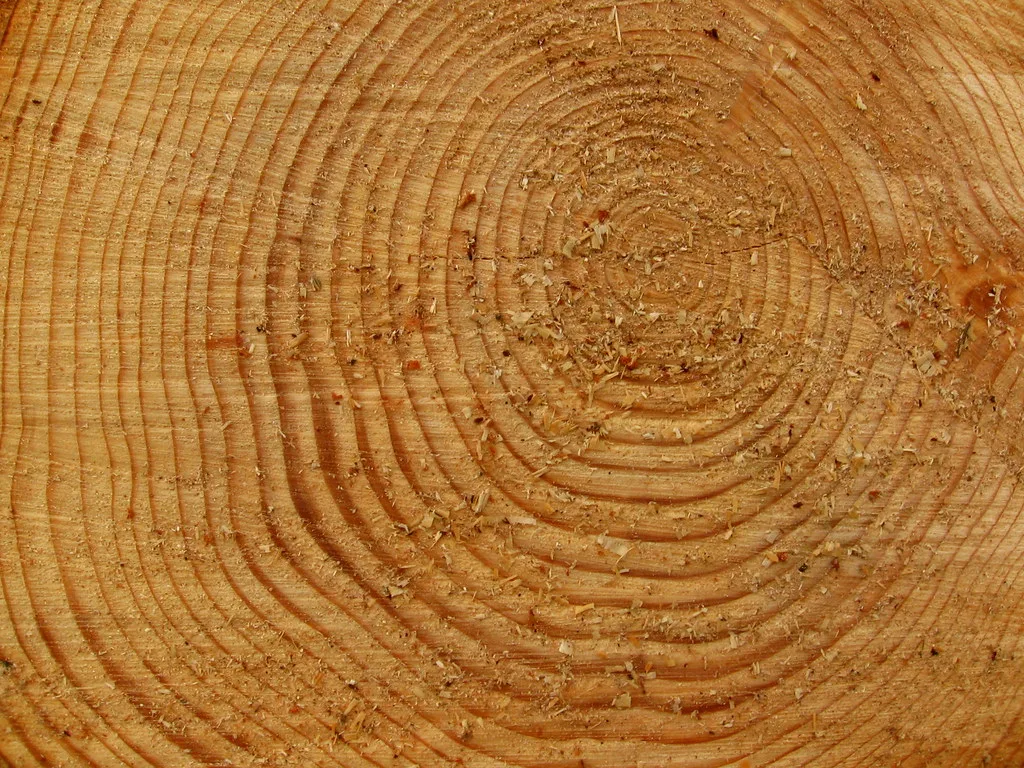
Open-grain means the wood has large pores you can see on the surface. When you cut across these pores, they’re visible to the naked eye and act like tiny channels. [5] Juice, meat drippings and food bits settle into them, so the board is harder to keep clean and shows food stains. [5]
This catches a lot of DIYers because oak is a hardwood. It feels tough and is easy to find at home centers, but it’s not often used in cutting boards because of those pores. [5] Save red oak for furniture and trim.
Softwoods and soft hardwoods: pine and poplar
Soft woods lose the knife battle. Pine is soft, so it shows cutting scars from knives more easily than a harder wood like maple. [5] Every slice leaves a groove, and those grooves collect moisture and debris just like open pores do.
Pine has a second problem: it might give food a resinous taste. [5] Poplar is technically a hardwood, but it’s soft enough to scar much the same way. That makes it a poor pick even though it’s cheap and easy to plane.
What to use instead
Pick dense, closed-grain hardwoods. Maple, walnut and cherry are among the best choices for exactly this reason. [3] Closed grain means the pores are small and tight, so the surface stays smooth and easy to wipe clean.
When you sort through lumber, look for boards that are flat and free of warps, blemishes and excessive knots. [3] A knot or a crack becomes a weak spot and a place for food to hide once you start chopping on it.
Edge grain, end grain or face grain: does it change the wood choice?
Grain orientation changes how a board behaves under a knife and how much work it takes to build, and it can also change which wood looks best. The three styles use the same species list, but each one shows the wood differently.
End grain: easiest on your knives, hardest to build
An end grain board shows the ends of the wood fibers on top, like the cut face of a log. Your knife edge slips between those fibers instead of slicing across them, so the blade stays sharp longer and small cuts tend to close back up.
The tradeoff is labor. You glue strips into a panel, crosscut that panel into new strips, flip them on end and glue the whole thing up again. That adds a second glue-up, many more joints to line up, and a lot of flattening at the end.
Porous woods are a poor fit for end grain because the exposed fiber ends soak up water. Some makers avoid oak, especially red oak, for end grain boards for this reason, while still finding it fine for face grain or edge grain serving boards. [2]
Edge grain: durable and a good first project
An edge grain board is made from strips glued side by side, with the narrow edges facing up. It’s tough, stays flat well, and needs only one glue-up, so it’s the style most first-time builders pick.
It is a little harder on knives than end grain, but a well-chosen hardwood holds up to daily chopping for years.
Face grain: the widest view of the wood
A face grain board shows the broad, flat face of the boards. It displays figure and color best, which suits serving and charcuterie boards more than heavy chopping.
Some woods look better in one style
A species that looks great one way can look flat another way. Zebrawood can look striking as an end grain or face grain board but less impressive as edge grain, depending on how the boards were milled. [2] Lay out a few strips in your planned orientation before you glue them up so you can see the pattern first.
Which glue should you use for a cutting board glue-up?
Pick a water-resistant wood glue that is food-safe once it cures, then clamp the board with even pressure so every joint closes tight. A cutting board gets washed, wiped and soaked with juice over and over, so the glue line has to handle repeated moisture without softening or letting go.
Choose a water-resistant, food-safe glue
Look on the label for two things: water resistance and a statement that the glue is safe for indirect food contact once cured. A glue made only for dry indoor furniture can let a joint creep open after a few months of sink time, and that gap becomes a spot where water and food bits collect.
Wet glue is not food-safe, so let the board cure fully before you sand it, oil it or set food on it. Follow the cure time printed on the bottle rather than guessing, and plan the glue-up so you aren’t rushing to use the board the same day.
Clamp evenly for tight joints
A strong glue can’t fix a bad joint, so the strips need to meet flat and square before any glue goes on. Do a dry fit first: lay the strips out, clamp them without glue, and look for light showing through any seam.
When you glue up, spread a thin, even coat on each mating edge and alternate clamps above and below the board. For example, on an 18-inch board you might set three bar clamps underneath and two on top, spaced every 6 to 8 inches, so the panel stays flat instead of bowing. Tighten them gradually from the center out until a small, even bead of glue squeezes out along each seam.
Scrape off that squeeze-out once it turns rubbery rather than wiping it wet, which smears glue into the grain.
If you want to compare glue types side by side, the furniture glue article covers that in full.
Is wood better than plastic, rubber or glass?
Wood is the best all-around pick for most home cooks because it’s easy on your knife edges and lasts for years, but rubber, glass and stone each have a place. Here’s how they compare when you’re deciding what goes on your counter.
Rubber: soft on knives, built for heavy use
Rubber boards are even softer than wood and are the type most commonly used in restaurants. [3] They’re durable, sturdy and easy on your knife, which makes them a solid choice for all chopping tasks, including raw meat. [3]
The tradeoff is mostly about feel and looks. A rubber board works well as a dedicated meat board, while a wood board stays out for bread, vegetables and serving.
Glass and stone: easy to clean, rough on edges
Glass and stone are non-porous, so you don’t have to worry about bacteria soaking in or the board warping. [3] They’re also simple to maintain, since neither needs oil. [3]
The problem is your knives. A hard surface like tempered glass or granite rolls a sharp edge quickly, so you’ll be honing and sharpening far more often. These materials make better serving platters or pastry slabs than everyday chopping surfaces.
Wood: protects edges and lasts with care
A wooden board won’t dull your knives the way harder materials do, and it doesn’t get scratched or cut up as easily as many other board materials. [6] Wood is also often favored over plastic because it’s much more durable and keeps knives sharper. [3]
That lifespan depends on you. Wooden boards last much longer if you buy a quality board and take care of it properly. [6] In practice that means hand washing, drying it on edge, and oiling it now and then.
Plastic still has fans, and the choice comes down partly to personal preference. [3] If you only cook occasionally, a plastic board may suit you better. [3]
Picking your board wood
If you remember one thing, make it this: when you’re unsure, start with hard maple. It’s dense, stands up to moisture and warping, and is relatively easy to work, so it forgives a first build [1]. A plain maple edge-grain board is a solid first project.
If looks matter more, pick walnut or cherry instead [1]. American Black Walnut has been the most popular wood among custom board makers in recent years, and you can add an accent species on the border for contrast [2]. Before you buy lumber, settle on your grain style. Zebrawood, for example, looks great in end grain and face grain but can disappoint in edge grain [2].
